[NOVEL] Mobile Suit Zeta Gundam
BREAKING TWO YEARS OF SILENCE:
THE PUBLICATION OF GUNDAM’S FIRST TRUE SEQUEL
In May of 1984, at the Bandai booth during the Shizuoka Hobby Show, Kodansha announced the forthcoming release of a novel titled Char’s Counterattack: Gundam. At the time, there was no word of an animated continuation, yet anticipation for a direct sequel to Mobile Suit Gundam had been mounting for years. This first announcement, which would later evolve into Mobile Suit Zeta Gundam, was accompanied by the striking tagline, “Answering the passion of ten million fans,” encapsulating the fervent expectations that surrounded it.
The book’s release came nearly a year later, in April, just one month before the television broadcast of Zeta Gundam. The first volume of the novel functioned less as a spoiler and more as a prologue. Rather than plunging immediately into Kamille’s conflict with the Titans, it explored the activities of Bright Noa, the current whereabouts of Char Aznable, and the fates of the White Base crew. Its purpose was not to pre-empt the story but to equip readers with a deeper grasp of the world’s shifting context before the new series aired.
From the second volume onward, the novel proper served as a continuation of the original Mobile Suit Gundam. While the divergence from the televised narrative was not as radical as in the earlier novelization of the first series, the Zeta novel was still rich with flourishes unique to prose. Nowhere was this clearer than in its conclusion. Kamille’s tragic fate did not stem from Scirocco’s lingering curse, as in the anime. Instead, it was the death of Rosamia, something of a sister to him. It was so reminiscent of the loss of his mother, that it shattered his psyche. In the novel’s haunting final scene, Kamille drifts into silence, his visor left open in the cold of space.
Kadokawa’s Sneaker Bunko edition distinguished itself from Kodansha’s by including commentary absent from the original release. The first of these came from Shinji Hashimoto of Bandai’s Model Business Division No. 3, who had overseen countless products during the height of the Gundam boom. The second was provided by Katsuki Hamamatsu, editor-in-chief of Fanroad, the influential fan magazine that helped cement Zeta Gundam and ZZ Gundam within the culture of the time. Finally, the fifth volume closed with reflections by Tomino himself, who looked back on his own frame of mind during the novel’s creation. In later digital editions, however, only Tomino’s afterword from the fifth volume was preserved.
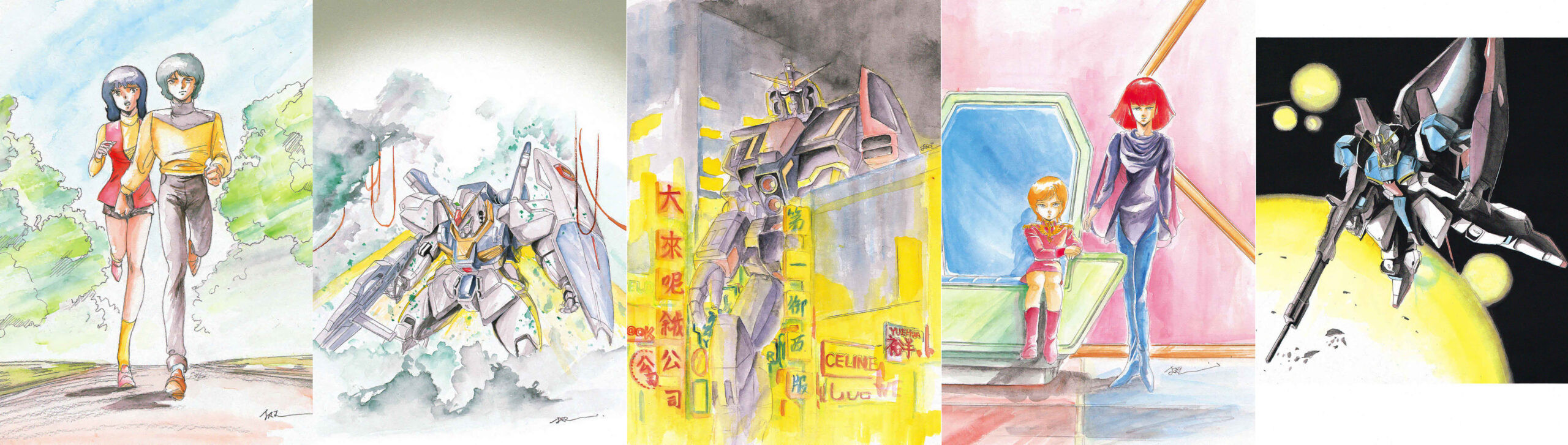
Years later, in the June 2003 issue of The Sneaker magazine, Tomino candidly recalled the circumstances that had led him to write the Zeta Gundam novels. He admitted he had bristled at the fact that the commission had come to him not as a novelist, but as a director, sought after more for his reputation as the creator of Gundam than as an author in his own right. It stung his pride. Yet he also confessed that it was precisely that professional pride, as a craftsman, that compelled him to pour his full effort into the work.

BETWEEN “WORK” AND PRIDE — Mobile Suit Zeta Gundam
By writing the Gundam novels, I was later given the chance to tackle Ideon at Asahi Sonorama as well. Through those experiences, I began to understand my own “limits” as a novelist, as a writer. What I came to realize was painful: I did not have the talent to truly write novels, nor did I possess the fundamental academic grounding required to sustain that kind of writing. Confronting that fact was brutal. I thought then that I could never write another novel.
And yet, when it came time to begin Zeta Gundam on television, I was told I also had to produce a novelization, while simultaneously directing the TV series. That demand, I can say plainly, was nothing more than the result of the animation studio’s commercial interests. Even so, there were people asking me to do it, people relying on me. However overworked I was, I thought, well, this is the job, isn’t it? And so I did it.
But in truth, it was agony. Because for me, “little Yoshiyuki,” who once dreamed of becoming a novelist, it felt like a cruel reminder that unless I held the position of anime director, unless I was attached to a project like Gundam, I would never be allowed to write novels at all. Each book was like being struck in the face with that fact, again and again. And it hurt.
That’s why, even recently, I’ve caught myself thinking, How many volumes of the Zeta novels did I even write? Five, wasn’t it? I’m sure I wrote them myself… Yet the truth is, I barely remember.
As for why there ended up being five volumes? The answer is obvious: I just churned them out. I wrote them by pushing myself through, without lingering over every detail. There’s no use pretending otherwise. And yet, even in that, there was pride. A stubborn pride that said, even if I must force myself, I will still write.
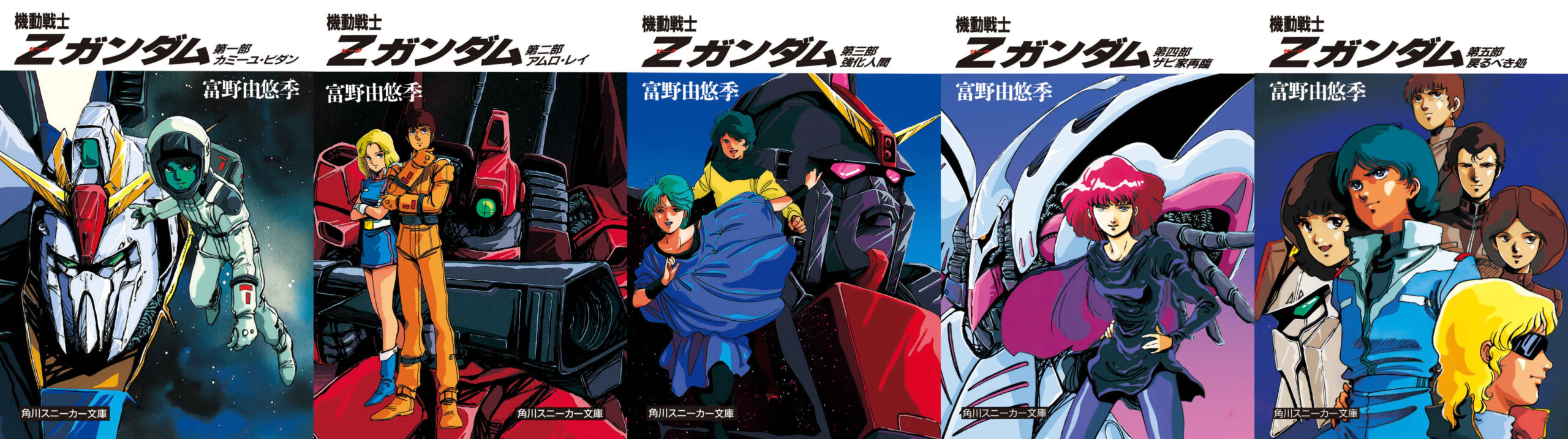
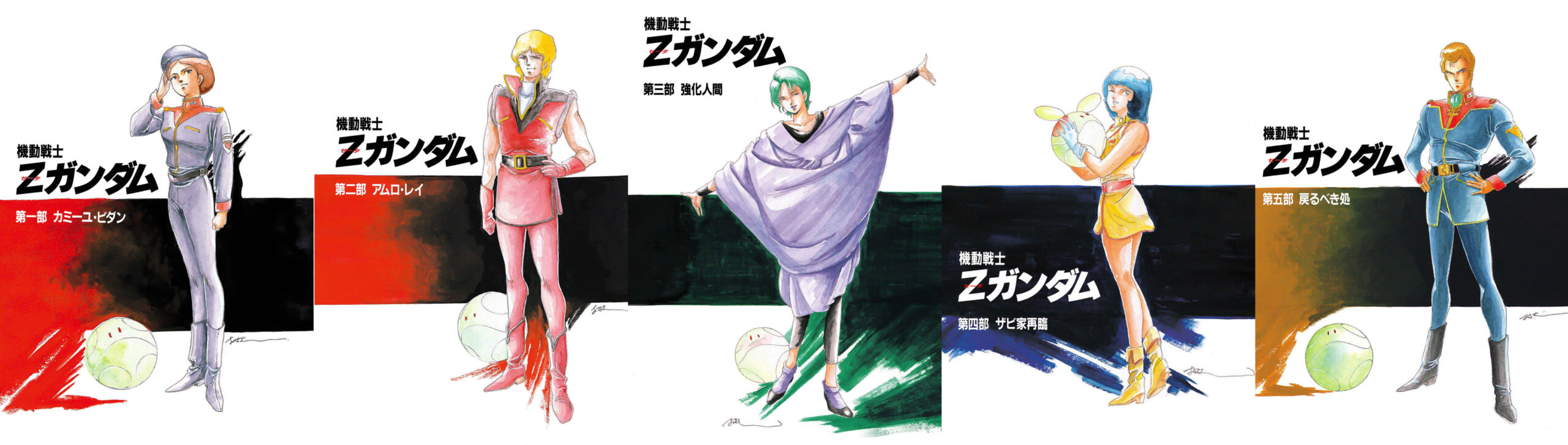
First Edition: Kodansha Bunko (5 Volumes)
New Edition: Kadokawa Sneaker Bunko (5 Volumes)
Cover Illustration: Haruhiko Mikimoto
Book Illustrations: Morifumi Naka
Frontispiece Illustrations: Osamu Tsuruya & Jun Suemi
NOVEL-EXCLUSIVE MOBILE SUIT DESIGNS
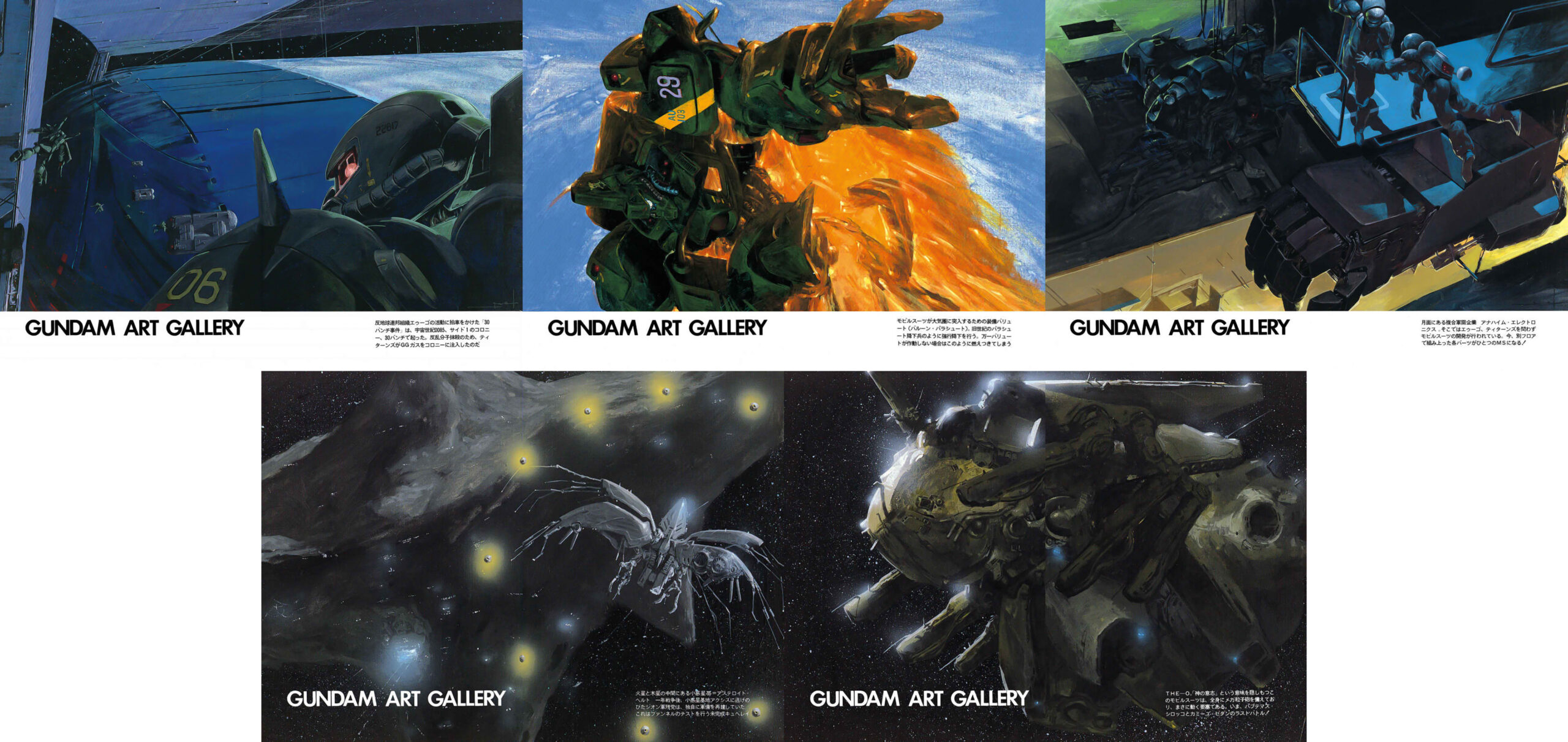
Mechanical Illustrations by Kazumi Fujita (Kadokawa Sneaker Bunko Edition)
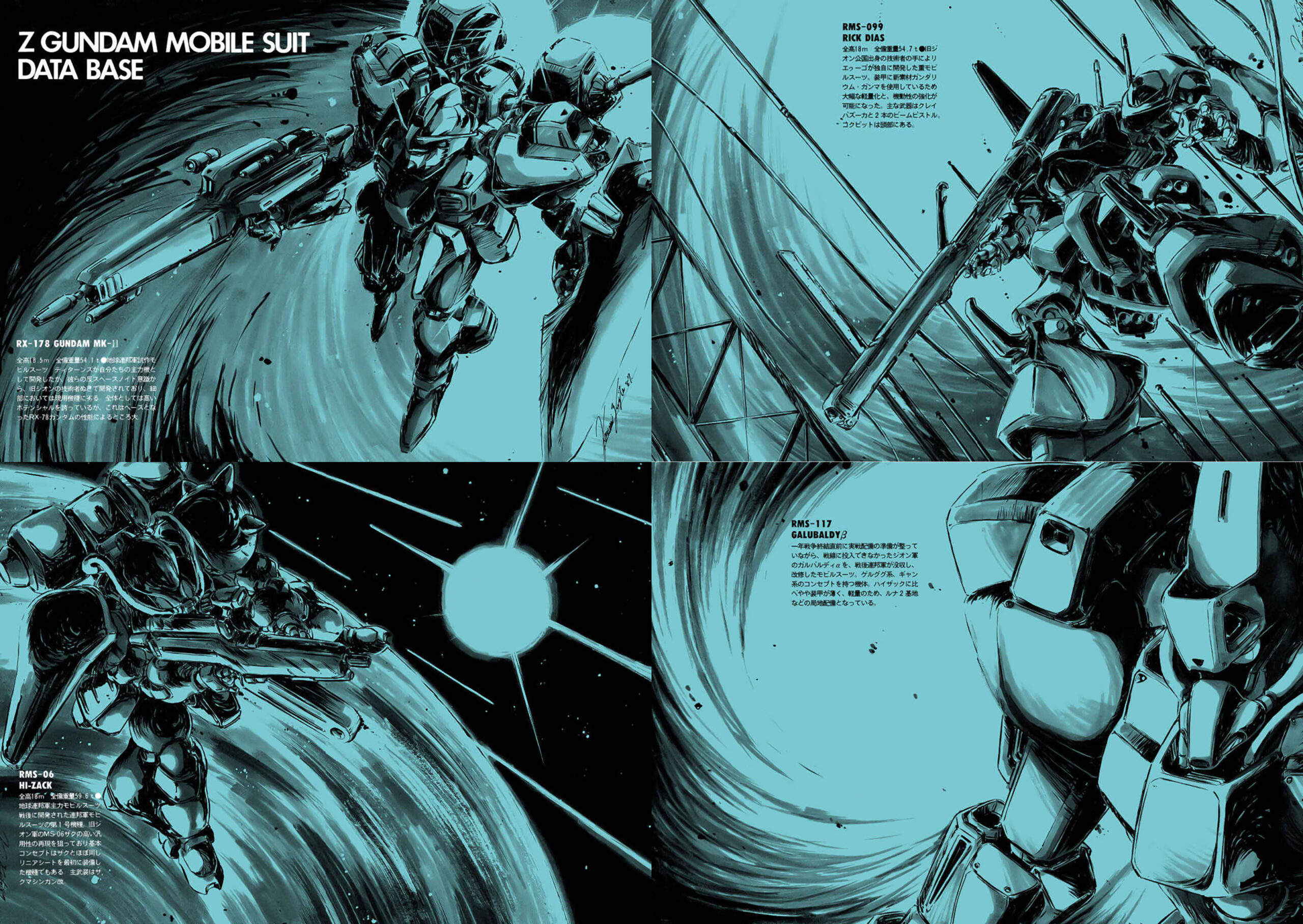
The novelizations of Zeta Gundam, whether published by Kodansha or Kadokawa, introduced mobile suit designs distinct from those seen in the anime. For the Kodansha edition, Mamoru Nagano contributed only the cover illustration. The Kadokawa Sneaker Bunko release, however, featured interior illustrations by Kazumi Fujita, the mechanical designer for the animated series, who reinterpreted the machines with his own distinctive sense of proportion.
(Vol2-5 coming soon)
A BRIDGE TO MOBILE SUIT GUNDAM
The original Mobile Suit Gundam was truncated to 43 episodes for its television broadcast. Yet the intensity of the fan response was impossible to ignore. It led to a trilogy of compilation films, which reignited enthusiasm and in turn sparked the model-kit phenomenon that would become known as the Gunpla Boom.
In Encounters in Space, the third of the films, the silhouette of Char appeared aboard a Gwazine-class ship in a sequence absent from the TV version. That fleeting image set speculation ablaze, fueling anticipation for a continuation. The Gunpla craze endured beyond the films, giving birth to the MSV line of model kits, which incorporated concepts from the compilation films, the novels, and fan-oriented publications like Gundam Century.
Meanwhile, Yoshiyuki Tomino himself was not standing still. He had gone on to direct television series and films such as Space Runaway Ideon, Combat Mecha Xabungle, and Aura Battler Dunbine. Despite persistent pleas, both from within the industry and from eager fans, for him to helm a direct sequel to Gundam, Tomino long resisted, steadfastly shaking his head.
What changed the tide was the collapse of Clover, the toy company that had been Gundam’s primary sponsor. The bankruptcy altered the production landscape, and, coupled with words from his own family, it led Tomino to reconsider his position. Soon after, Sunrise approached him with a formal request. Out of that convergence of pressures and opportunities, Mobile Suit Zeta Gundam was born.
It would prove the keystone that transformed Gundam from a singular work into a franchise, one that, nearly half a century later, continues to thrive.