[FEBRI FEATURE #3] Shukou Murase Interview (Part.01)
SEEKING CINEMATIC CONVICTION AS A THEATRICAL WORK
Special Feature: Mobile Suit Gundam Hathaway: The Sorcery of Nymph Circe
Director Shukou Murase Interview (Part 1)
The third installment of our special feature on Mobile Suit Gundam Hathaway: The Sorcery of Nymph Circe presents the first part of an extensive three-part interview with director Shukou Murase. In this opening segment, Murase discusses the introduction of 3D layout techniques, the visual power of “pulled-back” wide shots, and what he sought to express through the ν (Nu) Gundam as depicted in this film.
Interview & Text: Itsuki Mori
Please note: this article contains spoilers for key story elements.
IN THE SORCERY OF NYMPH CIRCE, I WAS CONSCIOUS OF AN OBJECTIVE CAMERA
――After producing and receiving feedback on the first film, what kind of creative direction did you establish for the second installment?
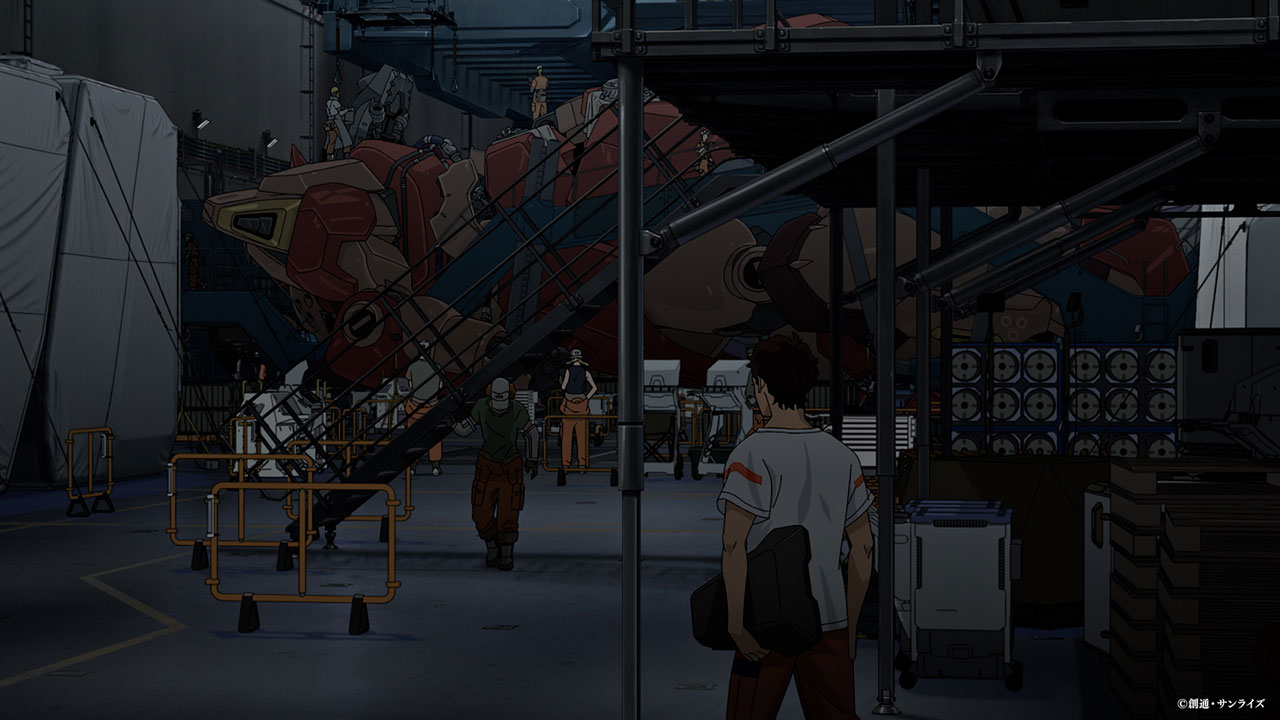
Murase: With the first film, we significantly changed the production style that Sunrise Studio 1 had previously used for the Gundam series, particularly in how 3D was employed. Back in the days of Gundam Unicorn, layouts were created in 2D (hand-drawn) first, and then the 3D mobile suits were animated to fit those layouts. But with Hathaway, starting with the first film, we shifted toward using 3D already at the layout stage. Because the story features so many ground battles, often set in complex terrain, that approach simply made more sense. In other works I’ve directed, we had already been working that way, so in a sense it was a natural progression.
――So you incorporated the methods you’d cultivated in your own productions into the Gundam series’ visual production pipeline.
Murase: Exactly. In the first film, that shift in the framework happened while we were actually making the film, we were changing the system as we went along. But for the second, it was baked in from day one. These days, more and more productions are building their layouts in 3D, and it’s gradually becoming the standard approach in animation production. So for the second film, a major point was that we began the project with a system that allowed us to generate as many 3D guides as possible right from the start.
――Whether for mobile suits or characters, does that approach also bring the results closer to your personal ideal as a director?
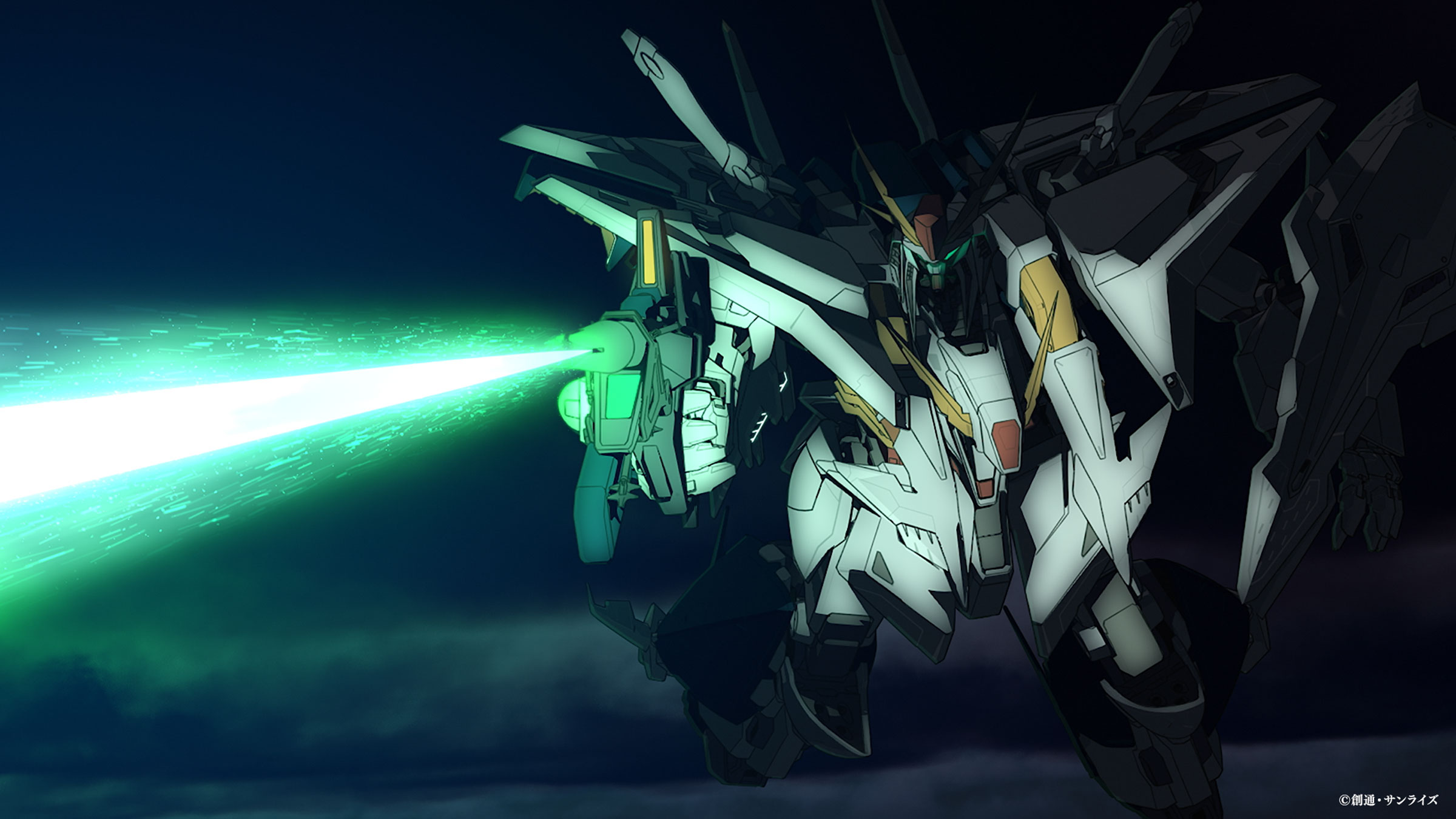
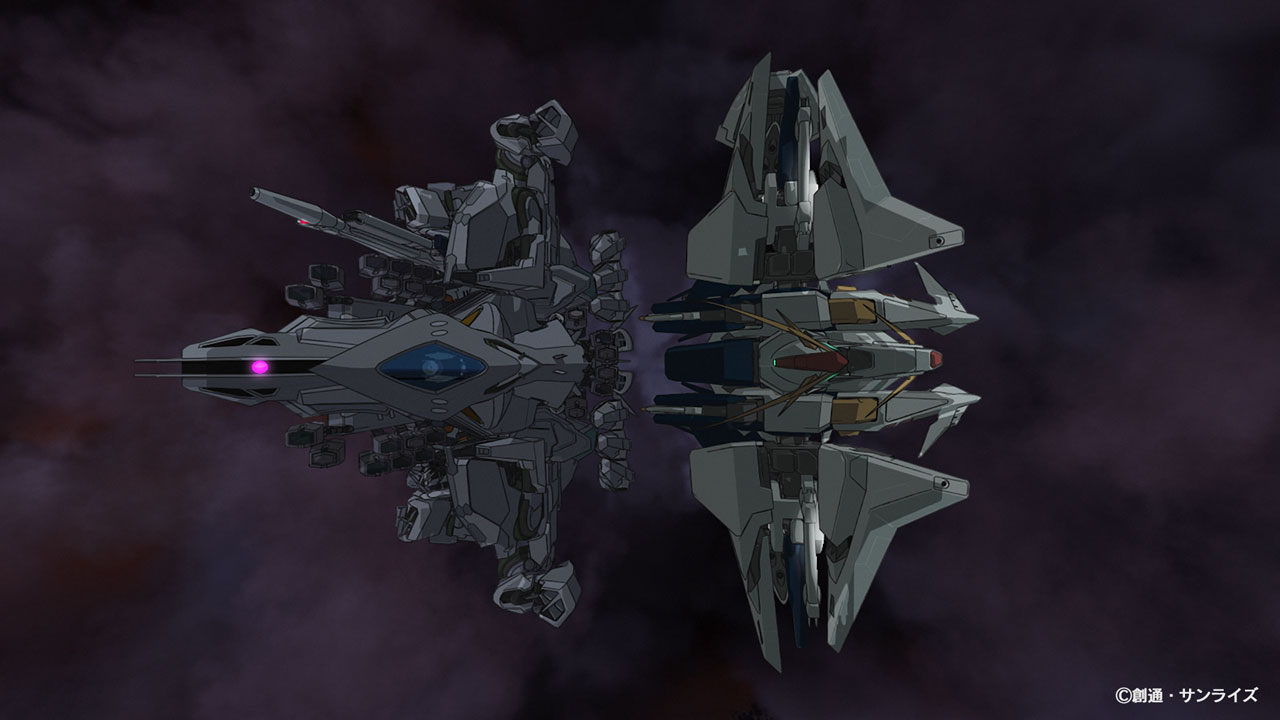
Murase: That’s certainly part of it. Another factor is that the mobile suit designs this time weren’t created with the expectation that they’d be drawn by hand. Ten years ago, someone would’ve told us to go to hell for even suggesting it. (laughs) Even if you somehow managed to animate them in key frames, the in-between animation and finishing work would have been a nightmare. But thanks to the groundwork we established during the first film, we were able to portray mobile suits like the Alyuzeus, with its complex surface geometry full of gaps and recesses, in a way that wouldn’t have been possible otherwise.
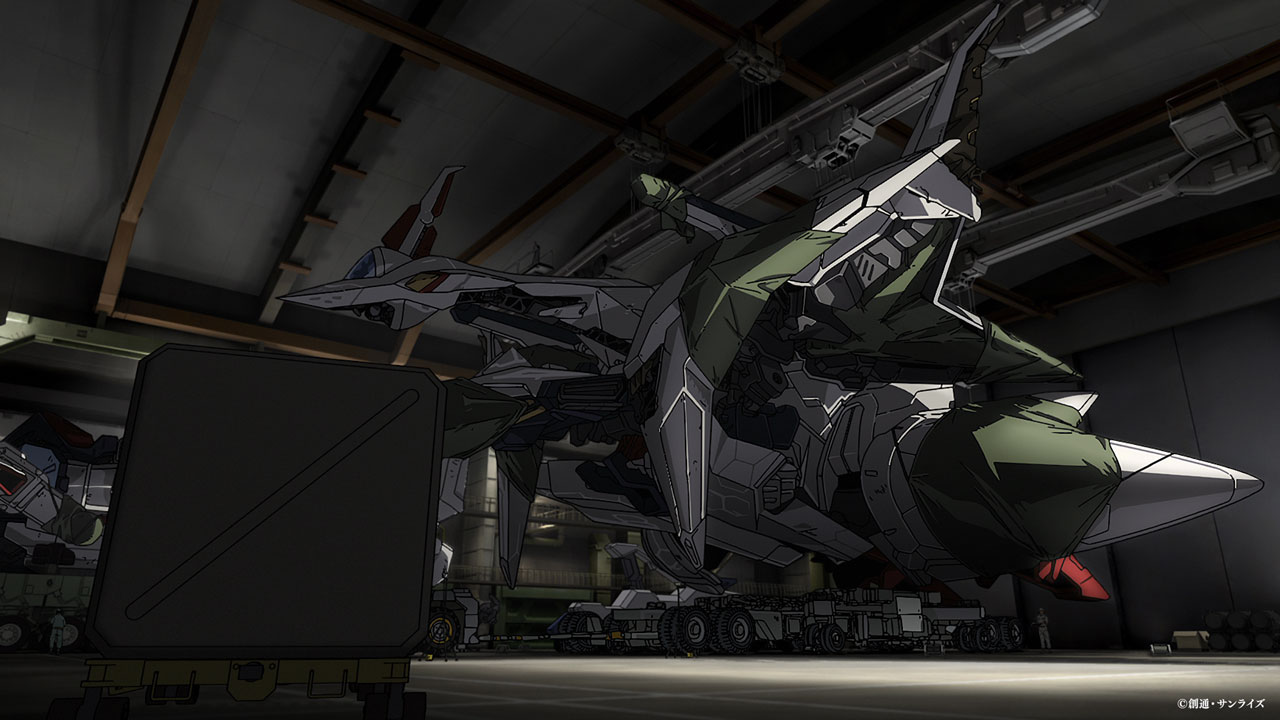
――I see. That connects with what you mentioned earlier about layouts. At the stage greeting held to commemorate the film’s release, you said that this time you increased the number of “pulled-back” wide shots. Was that a decision made with the theatrical screen and large formats like IMAX® in mind?
Murase: Yes, that was definitely part of it. When creating layouts in 3D, we don’t just model the objects, we also experiment with lighting that adds a certain degree of material texture and atmosphere. Once you do that, you can already start to see what the final image will look like. If you frame the shot with a clear intention, a wider composition actually tightens the layout and gives it more visual strength. With hand-drawn layouts, on the other hand, artists naturally begin by drawing the element they want to emphasize, which tends to bring the camera closer. But in the second film, I was conscious of maintaining a more objective camera, so the film ended up featuring more shots that pull the camera back slightly.
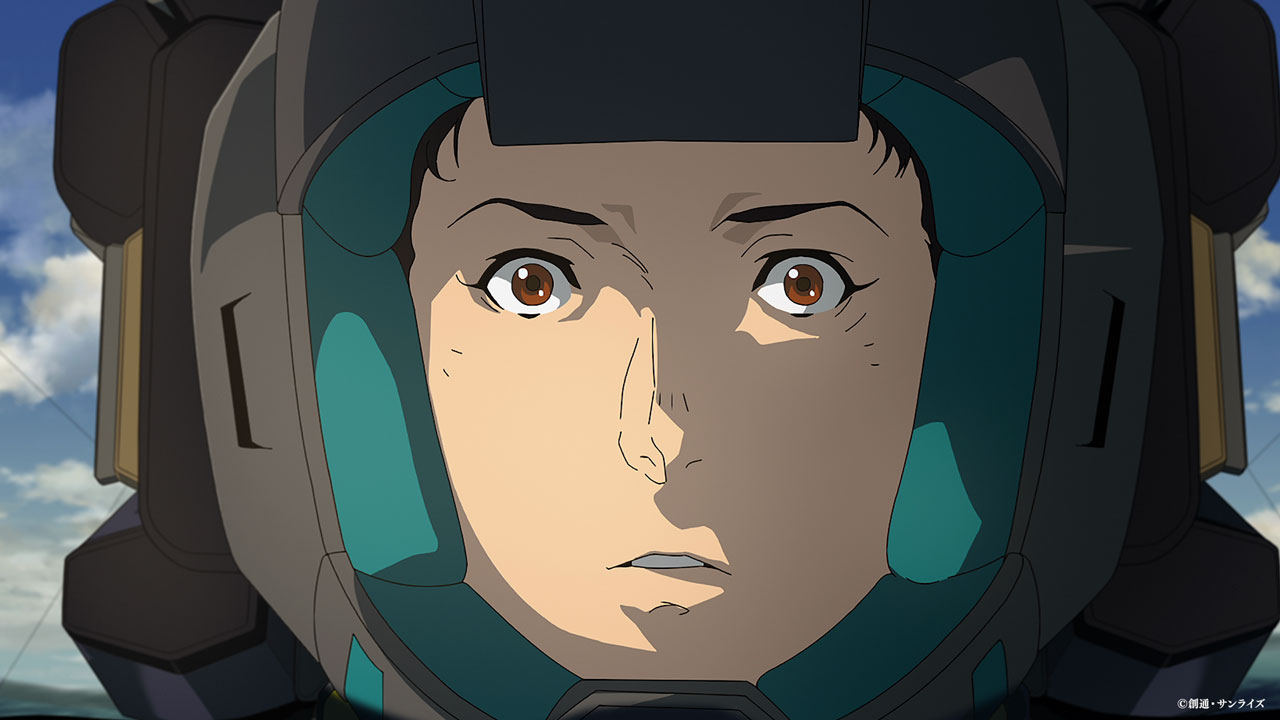
――At the same time, the second film also seemed to express the inner feelings of characters like Hathaway Noa and Gigi Andalucia through their gaze, expressions, and subtle gestures. Were you deliberate about the contrast between those wider, more observational shots and the moments where the camera zeroes in on a character?
Murase: Absolutely. If you rely on wide shots the entire time, you can’t see the characters’ expressions, and everything becomes too objective. So when depicting a character’s emotional state, the camera naturally moves closer, almost as if it’s reflecting their inner world. Even those decisions, though, were already being shaped during the layout phase, or rather, even earlier, at the stage of cutting the storyboards. We were building those sequences in 3D from that point onward. We’d examine the 3D data directly, experiment with different possibilities, and determine the cut structure through that process of trial and error.
THE νGUNDAM AS THE TRIGGER THAT DRAWS OUT HATHAWAY’S “SECRET”
――The second film makes it clear that this story is not a continuation of the novel Beltorchika’s Children*, but from the film version of Char’s Counterattack. Was that decision made early on?
Murase: The truth is, we’d already decided from the time we were producing the first film that we would treat it strictly as a sequel to Char’s Counterattack. However, during the first film, the broad outline of the story didn’t change in any meaningful way, so we chose not to explicitly bring attention to it.
Note: The original novel version of Gundam Hathaway was written as a sequel not to the film Char’s Counterattack, but to its novelization, Beltorchika’s Children. Because of that, the two versions of the prior story contain differences in Hathaway’s actions.
――So the second film is where you finally made that clear.
Murase: When we laid out the structure for the full three-part film, we decided that near the end of the second film, during the exchange involving Chan Agi, we would clearly establish that this story continues from Char’s Counterattack. Even though Hathaway’s past actions differ between the two versions, that difference is ultimately a matter of his inner psychology. It doesn’t actually affect the concrete events that occur in the second film.
――The Char’s Counterattack sequences in this film were also newly animated. Was that a creative choice to match the modern visual style?
Murase: No, the main issue was that we simply didn’t know whether it was permissible to use the original footage. If someone had told us upfront, “Go ahead and use the old footage,” and the original materials still existed, we might have gone that route. But barring that, recreating it ourselves would have been the only option. That said, the visuals from Char’s Counterattack still hold up beautifully even today, and I wanted to stay as faithful as possible in the recreation, so for the relevant scenes, the storyboards, timing, and movement are all drawn almost directly from the original. Personally, I wanted to push the precision even further, but the production techniques of that era and today’s methods are so fundamentally different that recapturing that intensity proved quite difficult.
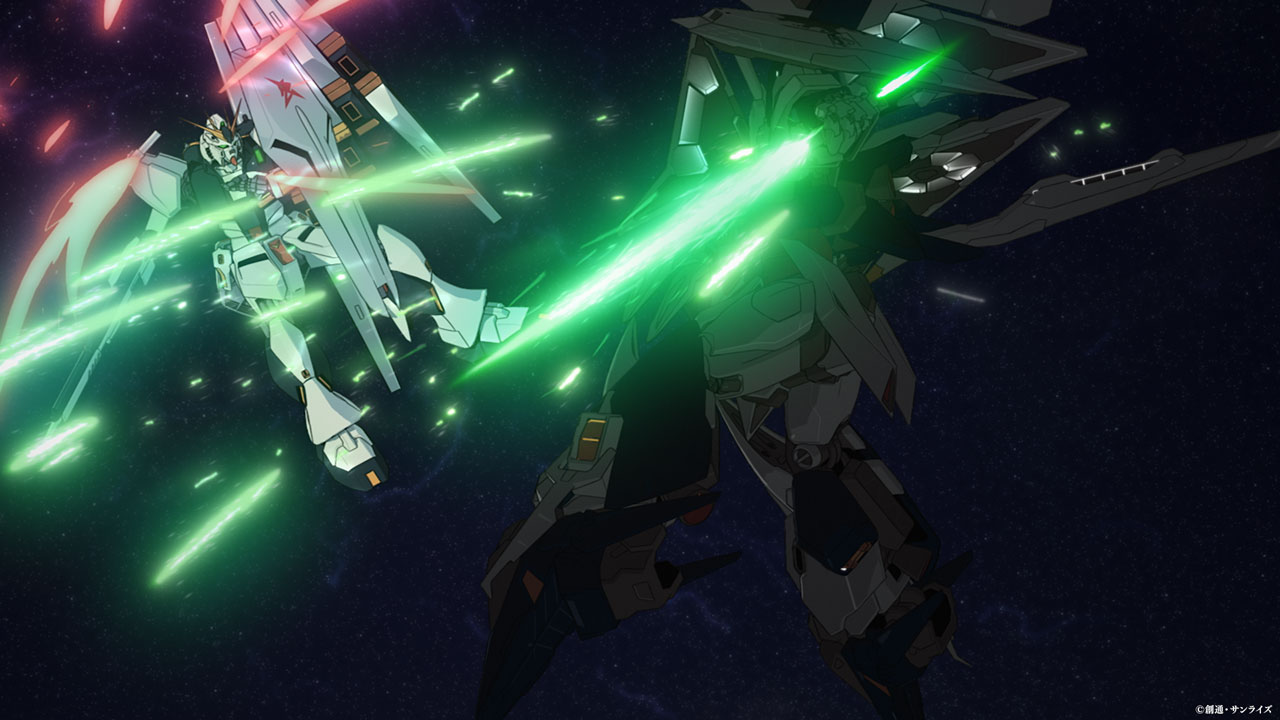
――The climactic highlight involves high-speed combat between Hathaway’s Ξ (Xi) Gundam and Lane’s TX-ff104 Alyuzeus. What did you set as the central focus for the mobile suit combat this time?
Murase: In the first film, we emphasized long-range engagements, with missile warfare playing a central role. This time, we wanted to focus more on close-quarters combat between mobile suits, and structurally we aimed to let the battle unfold at a slightly more deliberate pace. Originally, we planned to spend more time showing the Alyuzeus standing upright on its two legs, but the combat leading up to that moment ended up becoming more substantial than we anticipated.
――Was the idea of revealing the Alyuzeus, and within it, the mass-produced ν Gundam as its core component, something decided from the beginning?
Murase: Yes, that was already decided during the structural planning stage. What I wanted to depict wasn’t simply showing the ν Gundam for its own sake. Rather, I wanted the ν Gundam to function as a trigger that pulls out the “secret” buried inside Hathaway’s heart. I explained that intention to mechanical designer Hajime Katoki, and through a process of trial and error we arrived at the final design for the Alyuzeus. When the mass-produced ν Gundam emerges from within, the ν Gundam, an emblem of that past battlefield, sparks a flashback within Hathaway himself. That moment forms the climax of the second film, so Katoki spent a great deal of time refining the design. In the end, the scene turned out even better than I had expected.
Source: Febri (Interview published March 6, 2026)