
Fukui’s Themes in Early Works
While translations of Fukui’s novels will be forthcoming from me over the next several years (two a year, yikes!), I thought it was time to dive into some of the themes and commentary in a few of his early and most “infamous” works. I don’t know whether a lot of misunderstanding came from hypercondensed summaries, or folks trying to equate movie versions with their novel counterparts, despite works being either sister pieces or vastly different overall. I’m not going to pretend to be any sort of expert on any of this. I’m merely trying to illustrate both sides of the proverbial coin here with how certain themes and commentary can be taken from both sides.

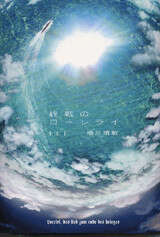
PUBLICATION INFORMATION
Publisher: Kodansha
Published: 2002.12.10
Price: Vol.01 1870 yen / Vol.02 2090 yen
Author Harutoshi Fukui

BRIEF OVERVIEW
One of the more important moral contrasts in the book is not simply “Japan good, America bad,” it’s moreso living, flawed people versus ideological abstractions.
In the text, Lorelei herself embodies that theme. She isn’t merely a weapon, she feels human presences inside machines and ships. Fukui repeatedly opposes the military habit of turning people into targets, tonnage, symbols, or statistics. The sea is full of “screams,” and the tragedy of war is that institutions train people not to hear them.
MAJOR THEMES
REJECTION OF SACRIFICIAL NATIONALISM
Asakura is the novel’s most ideologically dangerous figure. He is not a mere villain because he hates Japan. He is dangerous because he claims to love Japan so much that he is willing to destroy Japanese people for Japan’s sake. His idea of “symbolic national suicide” is the dark heart of the story. It transforms an old warrior ethic into national policy: death as purification, catastrophe as rebirth, civilian annihilation as historical necessity. Fukui dramatizes this as evil. Paula (Lorelei) and the I-507 ultimately reject ths idea that the future can simply be bought through mass murder. Shin’ichi Masami, the captain of the I-507, is one of the figures through whom the novel rejects Asakura’s apocalyptic logic. This is especially important because, in effect, the ending Asakura wants is not Japan’s necessary ending; it is merely Asakura’s desired ending. Masami doesn’t deny Asakura’s diagnosis; he denies the nihilism that follows. Humans, Masami thinks, are valuable precisely because of their indeterminacy, their unfinished qualities. People keep getting up after they’re knocked down. To define the essence and then kill in its name is the actual evil. That’s humanish refutation, not a chauvinist one. I’d argue that this shows that Fukui is not simply endorsing Asakura’s nationalism. Yes, he gives him powerful speeches, but the structure of the story defeats him. Fukui’s protagonists often fight “dangerous nationalist” ambitions, even while the villains voice criticisms of postwar Japan which he seems to take seriously.
DEFEAT AS A MORAL CRISIS, NOT JUST MILITARILY
One takeaway is that the book is obsessed with the meaning of Japan’s defeat. It asks: did Japan lose because America had more material power or because Japan’s own inner structure was rotten. Asakura’s critique is scathing. He attacks empty pride, emperor-centered dependency, bureaucratic evasion, and the suicidal rhetoric of “all hundred million dying together.” Imperial Japan is not depicted as healthy. It repeatedly shows the Japanese war machine as deluded, cruel, exhausted, and incapable of honest self-assessment. But the book also refuses a purely external judgment of Japan. It wants Japan to reach its own moral reckoning. That is where the nationalist coloration enters. The story is not content to say, “Imperial Japan was defeated because it committed aggression and lost.” It asks what kind of postwar Japanese subject can emerge from defeat. That, I feel, makes it less like a conventional antiwar novel and more like a national trauma narrative. Anyone who reads the book as a glorification of Imperial Japan has not read it carefully; the IJN brass are the most contemptible figures in the cast.
THE HUMAN BEING INSIDE THE MACHINE
The Ghost in the She–. Joking aside, Fukui seems quite vested in machines: the submarines, sonar, atomic bombs, codes, weapons systems, bureaucracies. But the emotional point behind all that is that every machine contains people. Lorelei can sense lives behind steel hulls. Submarine combat, which could easily become abstract, becomes intimate and horrifying. Enemy vessels are not just contacts on sonar; they are packed with breathing people. This, in turn, produces one of the strongest antiwar ideas: modern war becomes possible because distance, machinery, and ideology make human beings disappear. Lorelei reverses that process. She forces the characters to perceive the people whom war asks them to erase.
KIDS INHERITING THE FAILURES OF FATHERS
Again and again, the novel hammers home the point (or rather stages it, I suppose) that older men are handing a ruined world to younger people. Yukito, Paula, and the younger generation are forced to carry the consequences of decisions made by military leaders, imperial institutions, American strategists, ideologues, and conspirators. This is also why the ending matters. The postwar epilogue is not triumphant. Japan survives, but survival becomes compromised: occupation, dependency, constitutional pacifism, economic growth, pollution, consumerism, bubble collapse, media cynicism, and political hollowness all follow. Yet the book ends with a guarded hope that children may still sing, still choose, still continue. So the novel’s “hope” is not naïve happiness. It is a refusal to let the dead, the state, or historical determinists own the future.
DAMNING/TROUBLING ELEMENTS
PREMISE RISKS CENTERING JAPAN AS THE VICTIM
The central alternate-history hook, Japanese sailors trying to stop a third atomic bomb from destroying Tokyo, is emotionally powerful. That premise inevitably foregrounds Japanese civilian suffering. There is nothing inherently wrong with portraying Japanese suffering; Hiroshima, Nagasaki, firebombing, starvation, and collapse were real human catastrophes. But in a World War II story, centering on Japanese suffering coupled with the absence of Asia, Korea, China, the Philippines, Indonesia, the comfort women, Unit 731, Nanjing, can look like moral narrowing. Naturally, as a reader, one might question whether the novel remembers Japan’s war victims or whether it mainly asks us to mourn Japan? The answer is mixed. While Fukui is harsh on Japanese militarism, its emotional structure still gives the Japanese crew the redemptive role, which can feel like a reversal of historical moral burden. This is the standard structural critique applied to most Japanese WWII fiction by scholars working in the John Dower / Carol Gluck tradition: by collapsing the Pacific War into a U.S.–Japan binary, the colonial and continental dimensions vanish, and Japan becomes a victim of the war rather than its instigator. Scholars trained on the question of memory and the comfort-women issue, this absence is probably the first thing they noticed and the hardest to forgive.
NAZI SUPERWEAPON HELPS JAPAN SAVE TOKYO
Framed that way, it’s easy to read badly. The Lorelei system arrives through German/Nazi channels, and the plot uses secret technology, submarine warfare, and apocalyptic weapons. To someone encountering the story only in summary, it can sound like Axis techno-fantasy: Imperial Japanese heroes, German secret weapon, heroic mission, American nuclear threat. That summary is unfair to the whole book, but not irrational as a first reaction. Sadly, a lot of discourse boils down the novel to, “a Japanese submarine crew stops a fictional third atomic bomb.” That premise is used as evidence in accusations that Fukui is somehow right-wing or apologetic. And, if you’ve read all this so far, you can see so much that’s missing.
AMERICAN CONSPIRACY MATERIAL SEEMS LIKE EXCULPATION
Fukui gives American actors racist, strategic, and economic motives for using atomic power against Japan. Some of this is placed in the mouths of ugly characters while some of it functions as thriller conspiracy. The danger is that this can shift emphasis away from Japan’s own war responsibility and toward an image of Japan as the object of American manipulation. The story does criticize Japanese leaders severely, but the dramatic shape still conceals a secret plot in which foreign powers and elite calculations threaten Japan’s annihilation. That kind of plot can be thought-provoking as fiction, but it can also become politically dangerous if read as “Japan was mainly a victim of outsiders.”
JEWISH/INTERNATIONAL FINANCE CONSPIRACY
This is probably one of the most serious problems in the book. There is a scene set in Washington involving an elderly Jewish power broker and an American insider that is not merely a throwaway villain rant. The plot treats the elder’s financial contacts, elite access, and transnational influence as real within the fictional world. The discussion connects Jewish survival, statelessness, finance, Palestine, the Russian Revolution, the Russo-Japanese War, and Japanese national rebirth. Even if the Jewish broker is not depicted as a cartoon monster, the structure strongly echoes antisemitic conspiracy tropes: Jews as a hidden network, Jews as financiers behind world events, Jews as stateless manipulators of nations, Jews as a model for secret ethnic survival. Folks may recall Tomino fell into this same stereotype in his Zeta draft with Melanie Hue Carbine. That does not prove Fukui personally hates Jews. The scene is more complicated than that: the broker is also a survivor of persecution, Nazi antisemitism is not endorsed, and he functions as a mirror for Asakura’s fantasy of Japan becoming a “nationless” people reborn through trauma. But as a narrative driver, it is still deeply problematic. It imports a conspiratorial image of Jewish global influence and uses it to explain geopolitical events.
The book’s bibliography includes The Japanese and the Jews by “Isaiah Ben-Dasan,” a famous Japanese pseudonymous work that has long shaped Japanese comparison between Jews and Japanese. Ben-Dasan was not actually a Jewish author but a pseudonym for Shichihei Yamamoto. That connection does not make Lorelei automatically antisemitic, but it helps explain why its Jewish material feels less like accidental characterization and more like part of a broader Japanese discourse using “the Jews” as a symbolic mirror for Japan.
TRUE BELIEFS OR NARRATIVE ELEMENTS?
My safest answer is that some are clearly narrative elements, some look like Fukui’s recurring concerns, and some are troubling assumptions the book seems to absorb rather than fully interrogate. I’ll attempt to break these down Barney-style.
CLEARLY REJECTED
Asakura’s ideology is not endorsed. The book gives him eloquence, but it defeats him morally and dramatically. His belief that Japan can be purified through mass death is treated as a seductive horror. The same goes for emperor-worship, suicidal military rhetoric, and the logic of kamikaze-style sacrifice. Fukui is fascinated by men choosing death, but he is hostile to institutions that demand death as proof of purity. Again, Fukui repeatedly creates nationalist villains who diagnose postwar Japan’s decay, while the protagonists reject their violent corrective projects.
RECURRING CONCERNS
Fukui does seem genuinely concerned with Japan’s postwar identity, sovereignty, and moral immaturity. This is not only in Lorelei but also in works such as Aegis of a Ruined Nation, where scholars have read him as asking what Japan is protecting when its sovereignty is compromised by the U.S.-Japan security structure. While Lorelei criticizes postwar Japan as comfortable, dependent, forgetful, and spiritually thin, I would not dismiss that as merely “a villain talking.” The villain’s solution is rejected, but the diagnosis is not entirely thrown away. That is, in a sense, classic Fukui: he lets the antagonist say something painfully plausible, then rejects the antagonist’s answer.
AMBIVALENT NARRATIVE PLEASURES
The noble-submarine-crew material is both thematic and pleasurable. Fukui wants to condemn war, but he also wants the reader to feel the beauty of command, loyalty, machinery, sacrifice, and masculine fellowship under pressure. That does not necessarily make the book pro-war, but it does make it vulnerable to militaristic enjoyment. Like many military thrillers, it wants to say “war is hell” while also making war dramatically magnificent.
PROBLEMATIC ASSUMPTIONS
The Jewish-conspiracy material feels different from Asakura’s nationalism because the novel does not clearly dismantle it. It is not simply exposed as Asakura’s delusion. It helps the plot work. That means this material is not safely quarantined as “just a villain’s belief.” The book may not intend hatred, but it uses a worldview that many will reasonably find conspiratorial and prejudicial.
IS FUKUI BEING NATIONALIST?
Possibly, yes, but with qualifications. He is not a revisionist nationalist in the Kobayashi Yoshinori or Tsukurukai sense. He doesn’t deny atrocities, doesn’t apologize for the Imperial regime, depicts the bombings of Hiroshima and (referenced) Nagasaki with horror. (Note: he is not nationalist in the simplest sense of “Japan was right,” “the empire should return,” or “Japanese lives matter more than others.”) The novel is too critical of Imperial Japan for that. It attacks militarist bureaucracy, suicidal ideology, hollow pride, and the willingness to sacrifice civilians. But he is a “nationalist” in a broader literary sense, if that makes sense outside my own head. The novel treats Japan as a wounded moral organism whose survival, memory, and future matter intensely. It asks what Japan should become after defeat. It frames war’s end as a crisis of national soul. That kind of nationalism is not automatically sinister. Many postwar literatures do something similar. But in Japan’s World War II context, it becomes sensitive because national self-pity can slide into evasion of imperial responsibility.
Now come the “nationalist correlations.” Several features push the book toward that type of reading. First, the story is organized around Japan’s “proper ending.” The question is not only how to stop a bomb, but how Japan should end the war and enter the future. Second, Asakura’s language of national rebirth, ethnic survival, and “symbolic national suicide” draws from extreme nationalist thought, even though the plot rejects him. Third, the heroic center belongs to Japanese servicemen. The Imperial Japanese Navy submarine becomes the place where moral agency is recovered. Fourth, the epilogue critiques postwar Japan for dependency, comfort, consumerism, and forgetfulness. That critique overlaps with nationalist complaints about postwar Japan, even though Fukui’s answer is not the same as the far right’s answer. Fifth, the story reimagines 1945 so Japanese actors can actively save Tokyo. That gives agency and redemption to Japanese soldiers at the moment of defeat. So I would call the book nationally self-searching, not straightforwardly ultranationalist. It is closer to anguished postwar nationalism than to imperial propaganda.
Given that the dominant strain of Japanese center-right thought since the late 1990s, the Nakanishi Terumasa / Sakurai Yoshiko line, but in fictional form, the novel frames itself not as wanting to relitigate the war but as wanting to recover a coherent civic identity that the postwar settlement supposedly suppressed. Fukui sits squarely in that tradition. Whether one calls that “nationalism” depends on how one defines the word, but it is unmistakably the politics of the book.
WHY ALL THE HULLABALOO?
While my experience mainly comes from the Gundam community, the reaction is often shaped by compressed summaries rather than full readings. The shorthand version sounds bad: A Japanese Tom Clancy-style writer wrote a World War II story where Imperial Japanese sailors use a Nazi-linked superweapon to stop America from nuking Tokyo. That summary leaves out the book’s anti-militarist and anti-Asakura structure, but it captures why suspicion arises. Online English “discourse” about Fukui often cite Lorelei in this simplified way, connecting it to worries about his later Gundam work, Zeon sympathy, Japanese nationalism, and historical revisionism. Film commentary can intensify this because the movie version is easier to encounter than the full novel, and film summaries emphasize the thriller premise: plotters seek Tokyo’s destruction by a third atomic bomb, while heroes try to stop them. The full novel is more complicated than its reputation, but the reputation is not baseless. The combination of Axis-era heroism, Japanese victim-centered alternate history, critique of postwar pacifism, and Jewish-financial conspiracy tropes gives critics plenty to object to.
SO WHAT’S THE COMMENTARY?
This is probably the crux of everything I’ve tried to put together, because you can have both a sympathetic and a hostile takeaway. While I’m probably distilling this down far too much, the softer side of this could be seen as “war destroying moral perception by turning people into symbols and targets,” or “a nation cannot be purified by killing its own people.” I’d even go so far as say, “The future belongs to children, not to ideologues who claim to act for them.” On the flip side, one could argue that it gives Imperial Japanese soldiers a redemptive fantasy while Japan’s Asian victims remain comparatively muted and that it critiques postwar pacifism in a way that can sound like nationalist impatience. The sympathetic reads track to the book’s explicit moral arc, the more hostile reads track its political framing and unexamined assumptions.
LAST CALL
Lorelei is troublesome, but not because it straightforwardly says “Imperial Japan was noble and America was evil.” That is too crude. It is troublesome because it tries to do several volatile things at once. It mourns Japanese suffering while criticizing Japanese militarism. It rejects sacrificial nationalism while indulging military nobility. It condemns mass death while building a thrilling plot around atomic conspiracy. It asks Japan to remember war, but its moral lens remains intensely Japan-centered. And it uses Jewish-financial conspiracy motifs that are genuinely hard to defend. Fukui’s deepest authorial position seems to be that Japan must not forget war, must not outsource moral responsibility, and must not let either pacifist comfort or nationalist rage decide the future. The way the novel dramatizes that position can also produce apologetic, conspiratorial, or nationalist-adjacent effects. I don’t think it serves any sort of propaganda, but it’s definitely a revealing postwar Japanese anxiety novel: anti-militarist in its explicit moral conclusion, “nationalist” in its emotional center, and politically compromised in some of its narrative framework.
A SMALL CAVEAT
Canvasing the net to try and find any sort of record on the novel was like searching for a needle in a haystack. Discourse is thin (as opposed to the film). Most critical attention went to the film adaptation, which is different and significantly softened text. A point of clarification on that front, though, the Lorelei film is considered a “sister” piece to the novel and doesn’t fall into the parent-child/mother-daughter dynamic. But, a deep dive into that will be forthcoming once I wrap up translating the Lorelei production book in the future.