
WILL GUNDAM AND EVA SURVIVE ANOTHER DECADE?
WILL GUNDAM AND EVA SURVIVE ANOTHER DECADE?
Director Kazuya Tsurumaki Looks at the Future of Robot Anime
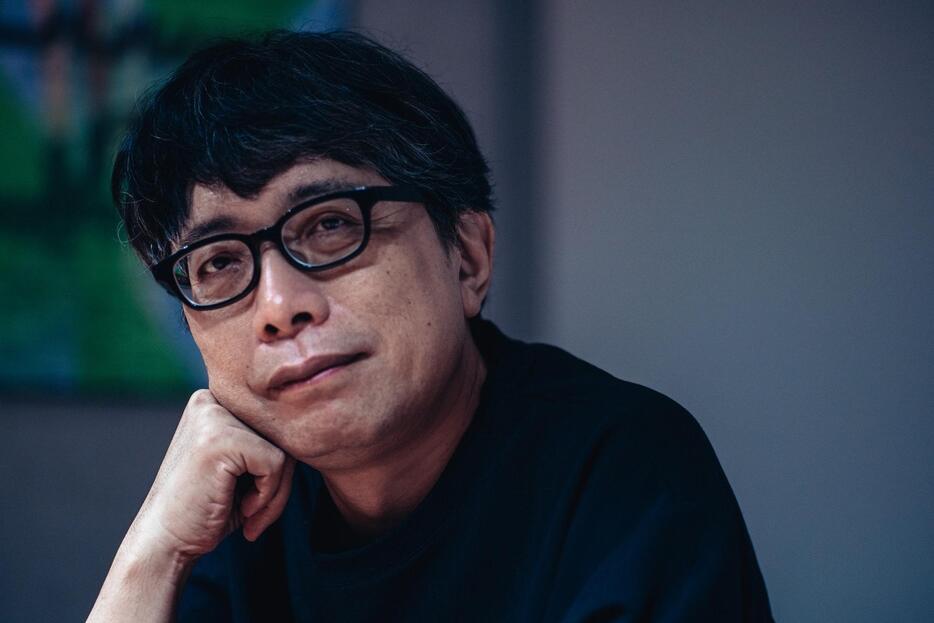
Japanese animation has grown to such prominence that it’s now considered a cornerstone industry of the nation. Studio Khara, home of the Evangelion franchise, stands firmly among its elite studios. Kazuya Tsurumaki, an animation director at Khara, rose to prominence as assistant director on Neon Genesis Evangelion, which famously became a cultural phenomenon, and later as director for the Rebuild of Evangelion films. He remains a close collaborator with Hideaki Anno, series creator and chief director. In July 2025, Tsurumaki received warm welcomes at Anime Expo in Los Angeles and Japan Expo in Paris. Yet, despite this acclaim, he voiced a sobering thought, “In another decade, even Gundam might not survive.” How does Tsurumaki envision the future of robot anime?
Written by Ryota Fujitsu
Photography by Kaori Nishida
Yahoo! News Original Special Features Editorial Team
THE NECESSITY OF UPDATING WHAT ROBOTS REPRESENT
Since his days as assistant director on 1995’s Neon Genesis Evangelion and subsequent director roles under chief director Hideaki Anno in the Rebuild of Evangelion films, Tsurumaki has earned acclaim. His solo directorial works, including the vibrant, energetic FLCL (2000), showcase his distinctly pop sensibility and dynamic characters. Recently, Tsurumaki took the helm of the newest Gundam series, Mobile Suit Gundam GQuuuuuuX, which offers a bold reinterpretation of the classic franchise begun in 1979. This reinterpretation has sparked heated debate among fans, and has even drawn young viewers back to the original series.
“My sole ambition initially was to become an animator, I never really thought about directing or storyboarding,” Tsurumaki says frankly. “So, I’m still finding my way around parts of the director’s job like sound, music, and editing. Hideaki Anno is exceptionally skilled in these areas, and even watching him up close, it’s difficult for me to articulate or conceptualize those lessons.”
Tsurumaki accepted the director’s role partly due to the invitation of Yuki Sugitani, the main producer of GQuuuuuuX, who had previously worked tirelessly as production desk for Evangelion: 3.0+1.0 Thrice Upon a Time. “When he reached out, I felt compelled to respond.”
Robot anime exploded in popularity in the 1970s, a time when Tsurumaki himself thrilled at watching humans pilot robots into battle. “Back then, motorcycles and cars symbolized adulthood, and piloting a robot was seen as a step even beyond adulthood, as a tool superior to adult authority,” Tsurumaki recalls. “But today’s younger generation doesn’t seem to feel the same. Modern manga and anime protagonists rely directly on magical powers or superhuman abilities to surpass adults. Video games let players easily control on-screen characters. Maybe that’s enough for them. I don’t think young people today fully grasp why anyone would need to pilot a robot. The generations who admired motorcycles and cars are just barely still active. Ten years from now, even Gundam might fade away unless we redefine what robots represent, a necessity I’ve felt acutely working on Evangelion.”
KIDS AREN’T AS CONSISTENT AS ADULTS:
EXPLORING THE MOTHER-DAUGHTER THEME
Mobile Suit Gundam GQuuuuuuX is a 12-episode TV series following Amate Yuzuriha, affectionately called Machu, a high schooler living in a space colony who unexpectedly finds herself piloting the Gundam GQuuuuuuX in illegal tournaments known as Clan Battles. Machu is joined by Shuji, a mysterious boy, and Nyaan, a mysterious girl instrumental in Machu’s involvement. A theatrical compilation premiered in January before the television broadcast began in April.
――Following the box office success of the theatrical version, the television broadcasts consistently trended on social media.
“Thankfully, the scripts and storyboards were already complete by the time the TV episodes aired, which was a huge relief. If we had to shape the series’ climax while reacting weekly to audience feedback, like a serialized manga, I probably would have gone insane worrying about all the different reactions (laughs). Although structured traditionally with setups introduced in the first half of each episode and resolved through battles in the second, we consciously aimed to encapsulate a dense amount of drama and information within each episode, echoing the intensity of Original Video Animation (OVA). Since this was my first experience directing a TV series, I originally wanted to incorporate more relaxed, slice-of-life moments, but ultimately couldn’t fit them in (wry smile).”
――Machu never seemed to hesitate or stall; she ran full speed ahead until the finale.
“Machu isn’t scared of failing or being disliked. She acts decisively when she believes something must be done. Early on, Tomoyo Kurosawa, who voices Machu, struggled with understanding Machu’s motivations. Adults typically act rationally toward their goals, but we can’t assume children will behave similarly. Kids aren’t always logically consistent; their actions don’t always align neatly with their objectives. Rather than calculating every step, Machu impulsively does what she feels is right at the moment. She isn’t perfectly composed or mature yet, she’s still just a girl, figuring things out. I explained to Kurosawa that I wanted Machu portrayed as someone not yet possessing a mature, adult core. Choosing a female protagonist profoundly influenced the series’ thematic direction. Machu’s relationship with Shuji directly triggers her piloting the Gundam but doesn’t define the show’s overarching theme. Instead, the idea of motherhood naturally emerged. Machu encounters several maternal figures who shape her growth into adulthood, her biological mother Tamaki, the junk dealer Annqi, Shiiko, a former Federation ace pilot appearing in episode four, and Lalah Sune from episode nine. Nyaan’s connection with Kycilia, a powerful figure in the Principality of Zeon, is also part of this ‘maternal encounter.’ Ultimately, these interactions culminate in the revelation that the series’ entire universe is, in fact, a reality crafted by Lalah from “the other side,” a world born from her maternal desire to protect Char, the man she loves.”
HOW TO CONFRONT WHAT IT MEANS TO BE “GUNDAM”
Central to Gundam is the concept of Newtypes, humans adapted to space with heightened intuitive and communicative abilities, though the exact definition remains fluid. Like original heroes Amuro Ray and Char Aznable, Machu is also a Newtype.
――In one poignant moment, Machu declares, “We evolve every day. Tomorrow, I’ll become even stronger! I don’t need anyone to protect me, I’ll become strong! A true Newtype!” This felt like your personal vision of what a Newtype embodies.
“The trouble with Newtypes is that their concept blends an idealistic, almost religious belief, ‘people can truly understand each other’, with practical advantages like heightened intuition,” Tsurumaki reflects. “These Newtypes introduced are usually young and emotionally immature, burdened by lofty ideals and overwhelming responsibilities, which often lead to tragedy. Whether it’s Char in Mobile Suit Gundam: Char’s Counterattack or Haman in Mobile Suit Zeta Gundam, despite their reasons, they try to fulfill hasty, excessive responsibilities like immediately saving humanity, which leads to catastrophe. Rather than two distinct types of humans, Oldtype and Newtype, I believe people exist along a continuum. There could be people who are 50% Newtype, others 10%, or even just 1%. Even figures like Amuro and Lalah might be at most around 60% Newtype. Ideally, humanity will gradually evolve toward being fully Newtype over generations. In this series, the character Challia Bull, originally introduced in the first Gundam series, is depicted as a Newtype over thirty years old. Presenting a mentally mature Newtype like him offers an intriguing contrast to the usual younger characters.”
――In the final confrontation, Machu battles a massively enlarged Gundam identical in design to the one featured in previous television series. Could this oversized Gundam symbolize the Gundam industry’s massive growth?
“Exactly. It’s intentionally meta, a form of critical commentary and an otaku-centric way of engaging with the material. The gigantic Gundam serves as a clear, understandable metaphor for this idea.” Tsurumaki notes.
FROM “CREATING FOR MYSELF” TO “CREATING FOR SOMEONE ELSE”
――After completing the series, did you feel any change within yourself, Director Tsurumaki?
“While working on the show, I experienced a different sensation compared to previous projects. Typically, my approach had always been to create primarily for myself, believing that making something I personally found most interesting was the sincerest form of creativity. However, this time, there was a constant awareness that I was “creating for someone else.” I was genuinely surprised by discovering this service-oriented side of myself. Whether this shift was due to concluding the long journey of Evangelion: 3.0+1.0 Thrice Upon a Time, or because the project was targeted more generally through broadcast television, or simply because it was “Gundam,” I honestly can’t pinpoint the exact reason (laughs). Maybe it’s the perspective of someone now in his late fifties, or maybe it’s because directing within someone else’s established world and characters naturally brought a more objective viewpoint.”