THE TRUE FACE OF THE FEDERATION FORCES
THE TRUE FACE OF THE FEDERATION FORCES
“The Earth Federation Government is nothing more than an agency of exile for space-born humanity.”
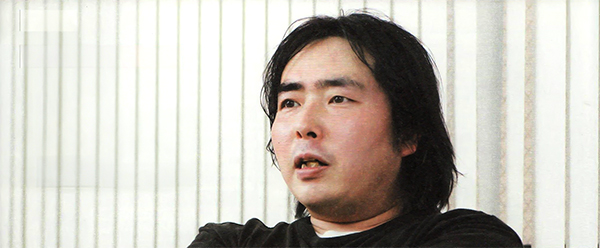
With Mobile Suit Gundam UC, Harutoshi Fukui set out to survey a full century of the Universal Century at once. Having completed his two-year serialization, we asked him to reflect on the Universal Century as a world, and particularly on the nature of the Earth Federation Forces within it.
THE HIDDEN DEPTHS OF THE EARTH FEDERATION FORCES
AS A BUREAUCRATIC BEHEMOTH
――When Mobile Suit Gundam first aired on television, you were very much the core audience of its generation. How did you perceive it at the time?
Back then we had the supercar craze, kaijū revivals, and running alongside all of that was the Space Battleship Yamato boom. Gundam arrived as the “next thing,” so it slid right in without resistance. Of course, even at the time, the stock phrase was that Gundam was something radically new, a clean break from conventional anime. But as a kid, such distinctions didn’t matter much, I simply thought it was incredibly cool. The real depth of it only struck me years later, when I revisited the trilogy of compilation films as an adult. Still, my childhood impression of the Earth Federation Forces was clear enough: an inflexible and troublesome group, entangled in bureaucracy and forced to mask adult hypocrisy behind superficial propriety, much like schoolteachers. Yet none of that dampened the sheer excitement I felt watching Gundam battles unfold. Compared to other robot anime, there was a unique intensity. Visors shattered, blood sprayed, men coughed up gore. That hit me straight in the gut. The idea that there were no “heroes” at all, only ordinary people shining desperately in their struggle to survive, that was shocking. And unforgettable.
――How do the Earth Federation Forces appear to you now, looking back from today?
In a word? Thin. Their layers are thin. Take Adenauer Paraya, Vice Minister in Char’s Counterattack. He’s the archetype. Is he a general staff officer, or a civilian bureaucrat at the top tier? His exact role is murky. And yet he wields near-independent authority in negotiations with Neo Zeon. But then, that’s inevitable if you want to make the colossal bureaucracy of the Federation comprehensible to the audience. If we interpret Paraya as a symbolic figure showing that the military and the Federation government are essentially fused, then what we’re really looking at is an institution so vast its true scope is impossible to grasp.
――That brings us to the Federation government itself. In the story, it never seems to possess much initiative.
That’s because by the time the One Year War begins, its role has already run its course. The Federation government as depicted in Gundam is humanity’s worst-case outcome, or close to it. Centralizing sovereignty requires denying diversity; that much is unavoidable. But the Federation pushes too far, unleashing heavy-handed authority under the banner of “protecting Earth.” That’s no healthy vision of the future. And yet, look around: global economic crises, environmental collapse, those same keywords that echo through Gundam. These are problems far too vast for national frameworks alone to resolve. In the search for real solutions, the idea of forming a supranational union like the Earth Federation government has begun to acquire real credibility as an option. Compared to thirty years ago, when the anime first aired, the vector toward such an arrangement has only grown stronger.
TURNING EARTH INTO A MEMBERS-ONLY CLUB:
THE EARTH FEDERATION GOVERNMENT AS AN INSTITUTION
――Many seem to view the establishment of the Federation government as the ideal form of human governance, so it’s intriguing that you describe it as humanity’s worst-case scenario.
If “one unified governing body under which humanity lives equally and happily” were the reality, then perhaps. But what did the Earth Federation government actually do? Its one and only achievement was to enforce the space emmigration policy. The transition to the Universal Century itself was marked by the start of that program. What that meant, in blunt terms, was this: to address the Earth’s environmental crisis, essentially a population crisis, humanity solved the problem by dumping its surplus population into space. The proof? By U.C. 0051, construction of new colonies had ceased. The necessary number of people had been expelled, and Earth was left with what the Federation deemed its “proper” population level.
Almost on cue, among Spacenoids, both Zeonist ideology and Newtype theory began to take root. These weren’t abstract philosophies, they were the soul-deep cry of those who had been driven into space, excluded from Earth, and cut off from their birthplace. Of course, humanity has a long history of migration, like the American frontier. Space colonization, too, was a repetition of that history. But what made it categorically different was that space itself was a realm fundamentally hostile to human life. Naturally, no one would willingly choose to settle there. That’s precisely why the Earth Federation government had to exist: to force people into space.
The Federation was never born of popular consensus. It was a construct born of agreement among the powers of the day, an “agency of exile” executing a program of forced abandonment. Which is why, once immigration was “completed,” the Federation’s very reason for being grew nebulous. Against the rise of Zeon and the outbreak of the One Year War, it had no effective recourse. Power slipped into the hands of the Earth Federation Forces, and from there it was only natural that extremist factions like the Titans would emerge.
IS THE FEDERATION GOVERNMENT A MIRROR OF MODERN AMERICA?
――In Mobile Suit Gundam UC, both the Federation government and its military are depicted in precisely that light. Set three years after Char’s Counterattack, the Federation Forces themselves seem to have undergone notable changes.
In portraying the Federation Forces, I emphasized what happens to an army once it no longer faces a symmetrical, full-scale adversary. Development of new weapons tapers off, and focus shifts to incremental upgrades of existing systems. In mobile suits, versatility becomes paramount. That’s why the mass-produced ReZEL incorporates a transformation system, doubling as a sub-flight system for the Jegan. At the same time, I placed emphasis on strengthening special operations units and their equipment, in preparation for asymmetric warfare. If the Federation’s sole enemy were Zeon’s traditional military, there would be no need for a machine like the Loto, an armored personnel carrier-type mobile suit. But when dealing with remnants like the Neo Zeon faction known as the Sleeves, conventional forces, even task forces like Londo Bell, are too large and unwieldy. The demand shifts instead toward special units such as ECOAS.
――That does sound similar to today’s U.S. military.
Yes, the U.S. military as it confronted the “War on Terror.” But look at it another way: if terrorism were ever eradicated by force, the very existence of the U.S. military would come under question. The debate is inevitable. For an army to justify its existence, some enemy must always remain. That’s why the Earth Federation Forces tacitly acknowledge the Sleeves: because their presence ensures the Federation Forces themselves continue to have purpose.
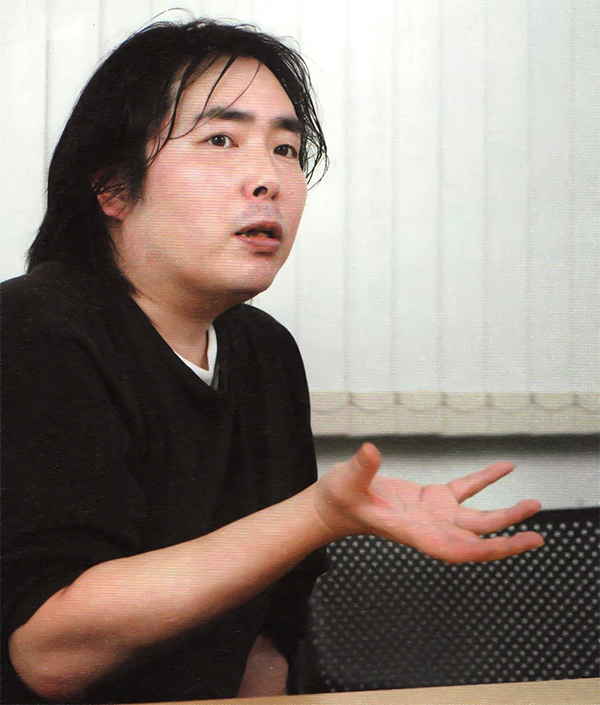
SLEGGAR: THE MAN WHO REFUSED TO FIT INSIDE THE FEDERATION MOLD
――Looking again at the mobile suit designs of Mobile Suit Gundam UC, one senses those ideas coming through clearly. Of the Federation’s machines, which would you say is your favorite?
If we’re talking across the entire saga, then it has to be the Gundam itself. I could invent any number of retrospective reasons, but the truth is simple: unlike the bureaucratic standardization embodied by the GM or the Ball, the Gundam had a singular charisma. That difference was what first made me fall in love with Mobile Suit Gundam as a work. As for UC, I love every last one of them. They’re like children to me. Of course, their actual birth is almost entirely thanks to Hajime Katoki. My role was only to provide the background, the conceptual guidelines for the suits that appear in the novel. Katoki would then return with designs, mechanisms, gimmicks, things that made me fall in love with them all over again. Working with him was a constant joy, a genuinely fortunate collaboration.
――UC also depicts human drama with real weight. Was there a particular character from the Federation Forces who influenced you?
If I had to name one, it would be Sleggar. He’s a man who, within a structure like the Federation Forces, neither rises in rank nor leaves behind a legacy. He accepts that reality with a kind of weary resignation, yet somehow maintains a personal code, something straight and human, that resonates with me. Such a figure would never have survived in Zeon. There, you had to be either a thoroughgoing idealist or an uncompromising realist. Without that extremity, you couldn’t last. Sleggar, by contrast, embodies a kind of Federation-style masculinity, a quiet brand of dandyism that shows how a man might live within such an institution.
――Now that you’ve finished the Gundam UC novels, with the anime set to begin airing in February 2010, is there anything else in Gundam you’d like to explore, should the chance arise?
It depends on the medium, of course. But for instance, pushing beyond Victory Gundam into something like U.C.0300, that kind of freedom could be fascinating. Even in original works, I want to keep creating stories that carry forward the themes explored in Gundam UC, works that will resonate with readers of this book and beyond.