
[FEBRI FEATURE #3] Shukou Murase Interview (Part.02)
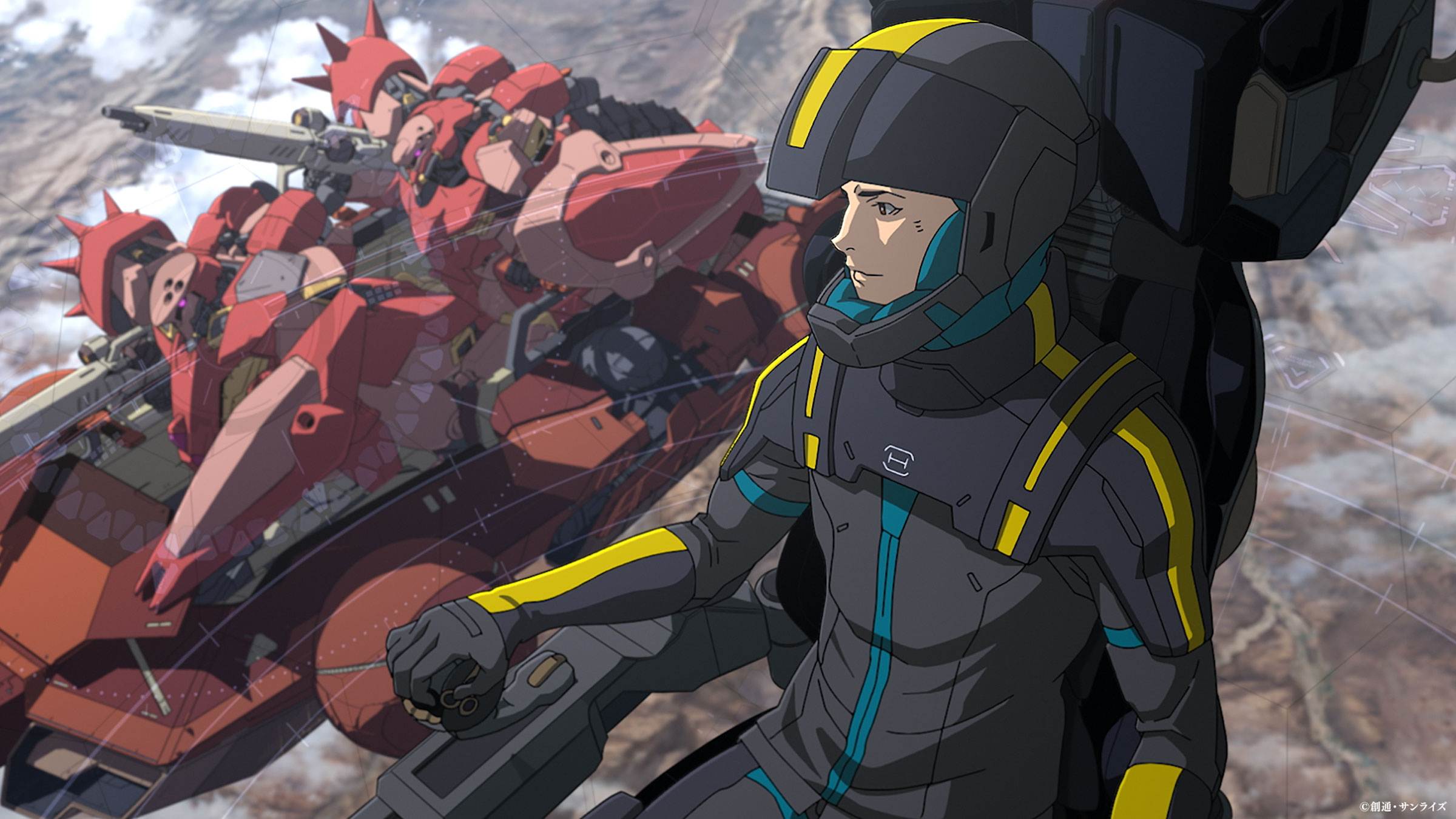
SEEKING CINEMATIC CONVICTION AS A THEATRICAL WORK
Special Feature: Mobile Suit Gundam Hathaway: The Sorcery of Nymph Circe
Director Shukou Murase Interview (Part 2)
The third installment of our special feature on Mobile Suit Gundam Hathaway: The Sorcery of Nymph Circe presents the second part of an extensive three-part interview with director Shukou Murase. In this next segment, Murase explores the film’s sound design and its inclination toward a more live-action visual sensibility. He also discusses the opening and ending themes that color second film, whose tone carries a strong undercurrent of a “coming-of-age film.”
Interview & Text: Itsuki Mori
Please note: this article contains spoilers for key story elements.
AND ENDING BEFITTING A COMING-OF-AGE STORY
――The second film concludes on a note that even Kensho Ono, who voices Hathaway Noa, and Reina Ueda, who voices Gigi Andalucia, have described as a “coming-of-age story.” There’s a certain exhilaration to the ending.
Murase: When I first began work on the first film, I went to pay my respects to Yoshiyuki Tomino. At that meeting, he recommended several films to me, and at the same time told me quite plainly, “Make it a coming-of-age story.” But even when I went back and reread the novel, it still didn’t really feel like a coming-of-age story at all. (laughs) That said, when you look at the structure of the second film, the story does revolve around Hathaway finally revealing his true self. And from Gigi’s perspective as well, their reunion becomes one of the emotional peaks of the narrative. If you treat that moment as the destination, the point the story is aiming toward, then ending the film the way we did begins to feel appropriate. In the novel, there’s more back-and-forth between Hathaway and Gigi after that point, but I figured if we didn’t depict that part, we could land on an ending that felt right for a coming-of-age story.
――And that includes the moment when Guns N’ Roses’ “Sweet Child O’ Mine” begins to play.
Murase: I was thrilled that we were able to secure the rights. It really does carry the audience into the feeling that they’ve just watched a coming-of-age film. I’d wanted to use it from the very earliest stages of planning. But a few years ago it was featured prominently in another film, Marvel’s Thor: Love and Thunder (released in 2022), so I thought it might be off the table. Then again, the fact that we ended up releasing three years after that film probably helped. (laughs)
――I see. On the other hand, the opening theme is “Snooze” by the American R&B artist SZA.
Murase: We had several candidate songs for the opening, but SZA’s track was the one that matched our image the closest, lyrics included. That said, I expected securing permission for the opening might be even harder than for the ending. Whether or not her personal brand aligned with the image people have of the Gundam franchise…
――Given how much the global perception of Japanese animation has risen in recent years, that may well be what tipped the scales in getting the license approved.
Murase: Yes, I think that certainly played a part.

――The transition into the opening, from the underwater sequence that seems to mirror Hathaway’s state of mind, has this wonderful sense of uplift and expansiveness.
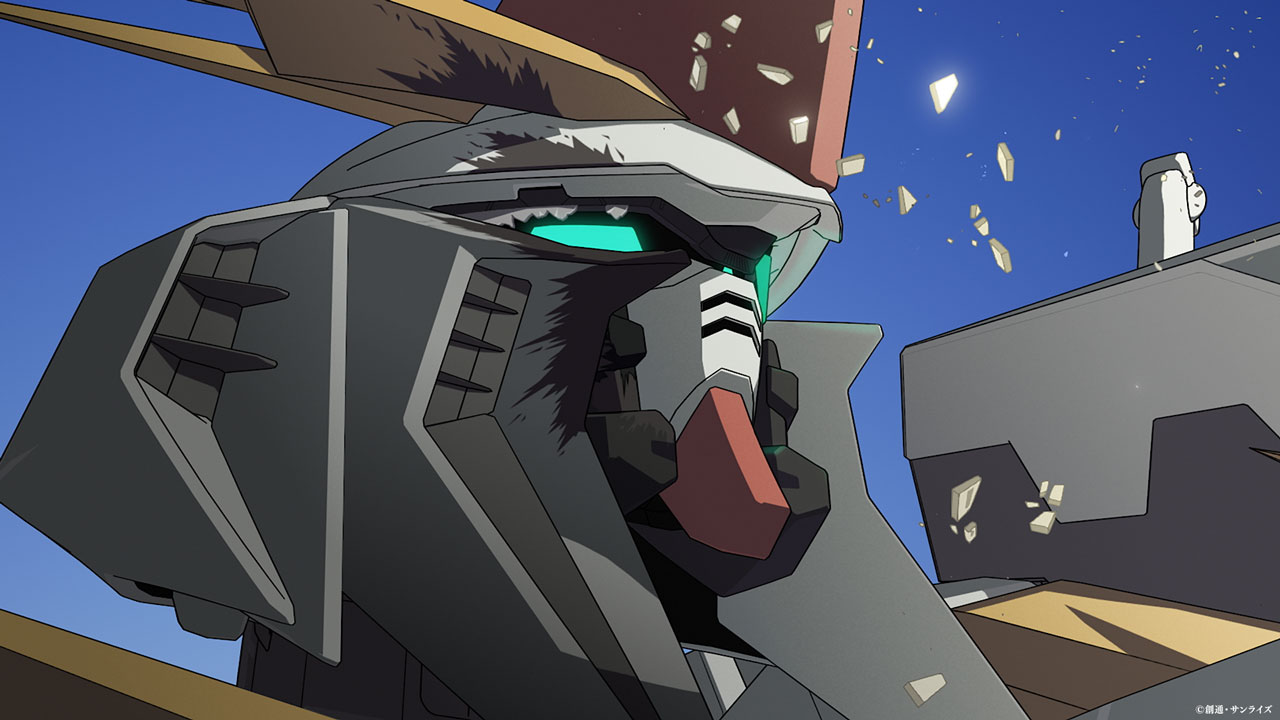
Murase: From the beginning up to that point, we spend quite a bit of screen time showing Hathaway brooding aboard the ship, wrestling with his thoughts and drifting in indecision. But the opening itself, where Hathaway and the Ξ (Xi) Gundam slowly dive beneath the water, almost as if descending into the past, came out very close to the image I had envisioned.
I WANTED THE FILM TO LEAVE THE SAME AFTERTASTE AS THE NOVEL
――With the use of Western music and other elements, the texture of the visuals sometimes feels less like traditional Japanese animation and more reminiscent of Western or even Hollywood cinema. Was that intentional?
Murase: I wouldn’t say I was consciously aiming for a “Western film” style. There are certain conventions of anime-style expression that have never quite sat right with me, and I think that’s what ends up pushing things in a more live-action direction. That said, for the first film specifically, I was somewhat conscious of the James Bond series in terms of how the story was structured.
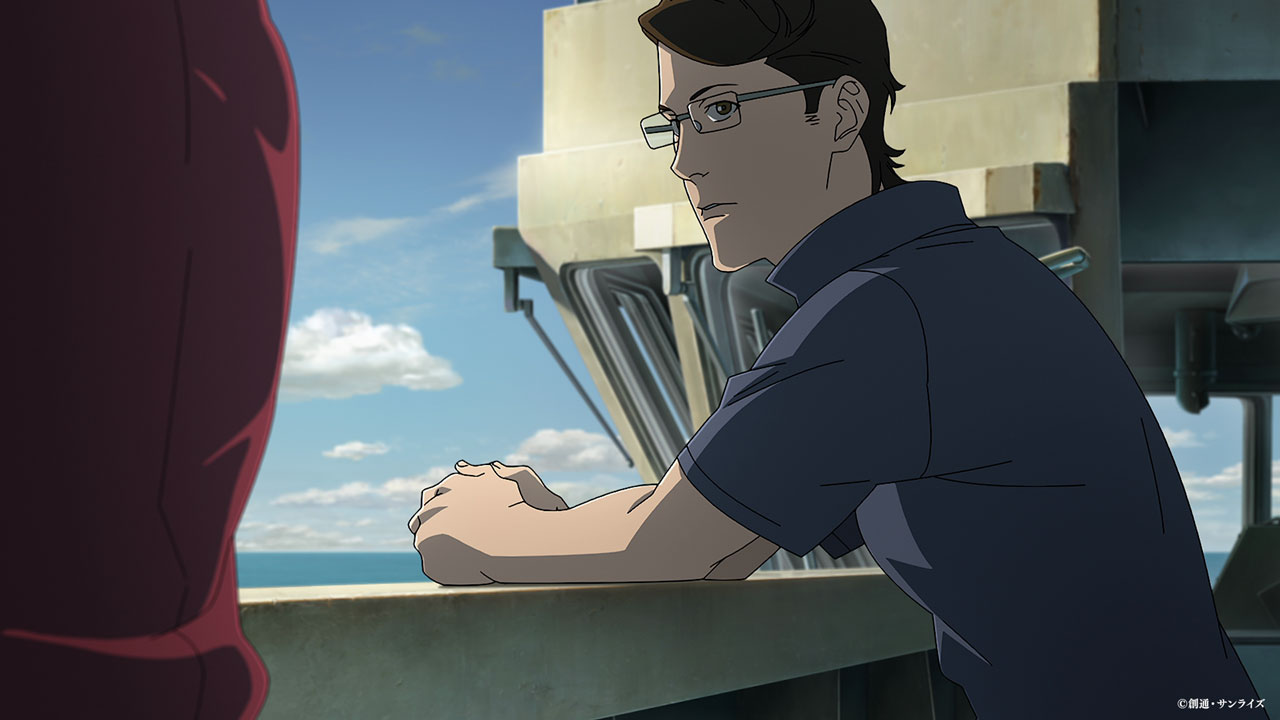
――In the second film, the story expands beyond just Hathaway, Gigi, and Kenneth. We also see more of Mafty and the Oenbelli forces, giving the film a stronger ensemble quality. I understand that your portrayal of Mafty drew on the student protest movements that took place in Japan.
Murase: It’s less that I consciously added that imagery myself. Rather, that’s simply how they appeared to me while reading the novel. Even when you consider them in contrast to the Earth Federation Forces, I wanted them to have this amateurish quality, like a grassroots environmental group formed by young people. I tried to weave that atmosphere into each character’s individual design.
――The Mafty members and the allied Oenbelli forces end up meeting brutal deaths, yet the film deliberately avoids depicting the full scope of the fighting. Was that intended to let the audience imagine what wasn’t shown?
Murase: Yes. My intention was to create something that matched the emotional aftertaste you’re left with after reading the novel. That was certainly the aim… though when it comes to the battle at Oenbelli, I sometimes feel that perhaps it might have been better to show it a bit more clearly.
――The opening scene where the camera moves from the subjective perspective of an Oenbelli soldier was particularly striking.
Murase: That’s part of what I mean. You have dark silhouettes set against an already dark background, so I wish I’d exercised a bit more visual control over how that was directed. I think the Oenbelli combat could have used a few more cuts to properly establish the situation.
――In terms of narrative, the film is anchored by the three-way dynamic between Hathaway, Gigi, and Kenneth, but it also foregrounds the characters’ shifting perspectives and emotional states as members of their respective organizations. That must have made it quite challenging to structure as a single film.
Murase: Yes, the structure was certainly difficult. The second film only exists because the first exists, and without that prior knowledge there are many things the audience simply wouldn’t understand. That said, I felt it was impossible to construct the second film in a way that could be fully understood without having seen the previous film. At the beginning of this movie we included a recap sequence from the first film, and I’ll admit, that was me leaning on a crutch.
ーーDid the sound design that supports the visuals also place stronger emphasis on accommodating large-format screenings?
Murase: I don’t think it changed dramatically from the first film. The aspects that worked well there were carried over into the second as they were. Just like the first film, the sound was added under an extremely tight schedule. But once I heard the initial version, very little needed to be changed. Sound director Koji Kasamatsu made a deliberate choice: when something was visually difficult to read in the film, he would boldly refrain from adding sound effects. Paradoxically, that restraint ended up becoming quite effective as a directorial choice.
――So the choice to not add sound sometimes proved more powerful.
Murase: At the same time, Kasamatsu also experimented with many different ideas on his own. For instance, there were scenes that originally had music, but when he showed me a version with the music removed at his own discretion, it just clicked, and that was enormously helpful. As for the more technical aspects, such as adapting the sound for large-format compatibility, that’s probably something you’d want to ask him directly. But he did mention that ideally he would have liked to explore much more detailed sound design, such as the acoustics inside the rental buildings used as locations in the film.
Source: Febri (Interview published March 7, 2026)