
Interview with Nobuhiko Genma
MECHANICAL DESIGN / MECHANICAL SUPERVISOR
Interview with Nobuhiko Genma
Looking back, I believe it was this very magazine that first interviewed mechanical designer Nobuhiko Genma back during Mobile Suit Gundam Unicorn. Hearing him speak then about his intense passion for Gundam made it clear to us that he was one of the key figures who helped carry Gundam’s visual language into the next era, someone instrumental in unifying styles of expression that had varied from work to work. That is why, each time a new title has appeared, we have continued to ask Mr. Genma for an interview. And with the latest installment, Mobile Suit Gundam Hathaway The Sorcery of Nymph Circe, we’ll be asking him about those very things once again.
Composition: Hiroyuki Kawai
HOW THE TX-ff104 ALYZEUS AND THE MASS PRODUCTION TYPE NU GUNDAM CAME TO APPEAR
――Five years ago, when we spoke with you around the release of Mobile Suit Gundam Hathaway, you told us, “We’ve got all sorts of things in the works for Part Two!” Well, at long last, we finally have our answer!
Genma: Well, in reality, production had already begun around 2016 or 2017, so we’d actually been laying the groundwork for close to ten years by now (laughs). What Great Mechanics is probably most curious about this time is, of course, the Alyzeus, and why it had to be a mass production type Nu Gundam, right? To begin with, as we discussed how to structure the second film, Katoki and I held repeated meetings on the mechanical side and then brought our proposals to Director Murase.
――The story diverges significantly from the original novel’s second volume, particularly in the latter half.
Genma: For this installment’s combat sequences, if we’d gone strictly by the original novel, it would’ve been a tough sell from a mecha standpoint. So we all agreed that “we need something to beef things up,” and went through extensive deliberations. At first, it was just this vague brainstorming of “what could we throw in to really get people fired up?” and personally, I was pushing for the ZZ Gundam. (laughs)
――Was there any sort of guiding principle for what parts would stay faithful to the original novel and what parts would be changed?
Genma: Respecting the original novel was our top priority from the start, so the basic direction, “how do we recreate the novel as faithfully as possible?”, is something we’ve carried forward even now. That’s why scenes like the massacre were used as-is, too. Even where changes were made, we went through careful discussions to make sure nothing felt forced or unnatural. That said, Murase has been the kind of creator, ever since his animator days, to pursue an almost abnormal level of fine detail. In that sense, this project really is a culmination of that… which means his standards are almost impossibly high (laughs).
――As a work, Mobile Suit Gundam Unicorn had something of a “festival” atmosphere when it came to mechanical depiction, but Gundam: Hathaway feels like a title with much less room for that kind of indulgence.
Genma: Festivals are completely banned here. When Katoki or I say, “I want to bring in this,” or, “I want to bring in that,” we usually don’t get much of a green light. This time around, the most we managed was slipping in the Re-GZ Custom, which Katoki proposed.
――I would’ve loved to see the ZZ Gundam, too.
Genma: Half of that was a joke, and there was no real necessity for it to exist in the story anyway (laughs), so naturally it was rejected. The mass production type Nu Gundam, on the other hand, was Katoki’s idea. At that point, it still hadn’t been decided whether the base would be the film Mobile Suit Gundam: Char’s Counterattack, the novel Mobile Suit Gundam: High-Streamer, or Mobile Suit Gundam: Char’s Counterattack: Beltorchika’s Children. In the midst of that process, the truth is that the mass production type Nu Gundam was also rejected once by Murase. There were other suggestions too, such as, “What if we just bring out the Odysseus Gundam as-is?” But in the end, that would have taken away any sense of novelty. So there was a lot of back-and-forth there as well.
――In the end, it became the mass production type Nu Gundam. What was the deciding factor?
Genma: Looking back, if you treat it as a derivative unit in Anaheim’s Gundam line, the line that bears Greek-letter names, from Gamma Gundam to Zeta to Nu to Xi Gundam, then a mass production type Nu Gundam would naturally have an OS and control architectures close to that lineage as well. Compared to pulling something in from a completely different lineage, it carried far more convincing in-universe logic, and that’s why it was adopted. Director Murase came around, too, “All right, then let’s go with the mass production type Nu Gundam.” Personally, I’d imagined something more along the lines of the Nu Gundam’s face appearing for just a split second, enough to make the enemy flinch… But he went so far as to bring in Amuro outright and somehow pulled it all together beautifully. That really surprised me.
――In terms of profile, the Alyzeus ended up following the Penelope’s form.
Genma: Katoki and I kept worrying away at the question of “how do we conceal the mass production type Nu Gundam’s true form?” (laughs). At first there was even talk of giving it something like the Crossbone Gundam’s fin nozzles. Basically, we were searching for anything that would work as long as “it doesn’t look like a Gundam.” But then Director Murase requested, “Please bring it closer to the Penelope.” That said, my own preference was to settle it not as a prototype of the Penelope, but as a trainer or practice unit. In the Gundam lexicon, the term “prototype” carries too much weight. It risks giving people the impression that it must therefore outperform the officially adopted machine, which is exactly the kind of misunderstanding that tends to happen. But if it’s a trainer or practice machine, there’s no way, no matter how you slice it, that it could be superior to the officially adopted unit. Alyzeus is, in the end, just a stand-in while the Penelope is under repair. It’s nothing more than a training machine, vastly inferior to the Penelope. Lane only pilots it because the Penelope isn’t available, he’s stuck with it out of sheer necessity. If I’d had my way, I would’ve preferred to steer the design away from a Penelope-like profile entirely. But ultimately, from an aerodynamic standpoint as well, it settled into that Penelope-esque form. That was a collective decision by the entire staff. Still, when audiences actually saw it in theaters, when a Penelope-looking machine cracked open, and the mass-production type Nu Gundam emerged from within, the fact that people were genuinely shocked? That made it all worth it. Director Murase had been pushing for the designation “experimental model,” but Alyzeus is, first and foremost, a trainer, a practice machine!
TRUE OR FALSE: IS THIS WHAT THE MECHA IN THE THIRD INSTALLMENT WILL LOOK LIKE?
――This may be jumping the gun a bit, but there have already been whispers here and there about various units that might appear in the third film.
Genma: The Argos Unit, you mean. As far as the established settings go, all that exists is text, there’s no visual reference whatsoever, and to this day, nobody really knows what kind of unit it’s supposed to be. I imagine everyone’s first instinct is to search something like “Argos Greek mythology,” but if you do that, you’ll probably end up with the hundred-eyed giant. I do not think that is it. A more natural origin for the name Argos, I think, would be the hunting dog Odysseus kept. It’s described as an extraordinarily intelligent dog, one that could move before Odysseus even gave the order when he went out hunting. That’s practically a funnel, isn’t it? At the time, even after looking into it, we could never determine who exactly came up with names like Penelope and Odysseus in the first place, whether it was Director Tomino or Moriki, but I imagine someone must have thought, “Argos, the personality of that dog fits a funnel perfectly.” That’s probably how the name came about. So from there, I pretty much concluded that the Argos Unit had to be funnels. The name and the function are linked, that’s such a brilliant idea, I think.
That said, under the current Universal Century setting standards, “funnels can’t be used on Earth.” There’s just no way something built like that could go whipping around under gravity. That’s why, in Gundam UC, the Shamblo had rotors attached so it could fly. But anyway, to get back to the point: if funnels can’t be used on the ground, then forcing the Argos Unit into the story in a way that tramples over the intent of the people who came before us would feel wrong. I’d like to go on record right here and now, “The Argos Unit will not be appearing!” (laughs)
――Are you really allowed to say that? (nervous laugh)
Genma: Well, five years ago I went around declaring we were breaking away from Gundam, and then our Gundam look-alike ended up with a full-on Gundam face, so… I honestly have no idea how things will actually turn out. (laughs).
――That kind of clever twist is exactly what you and the team always bring to the table. We’ll be looking forward to it!

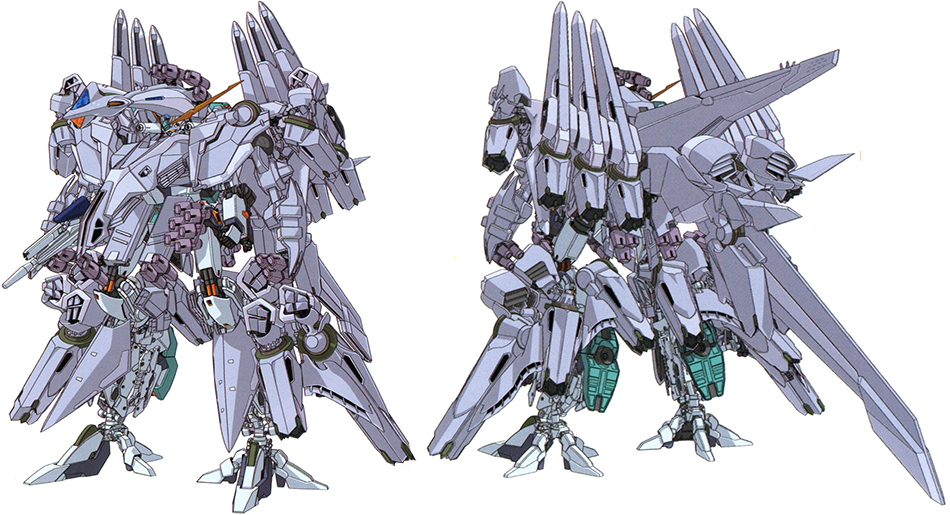
TX-ff104 ALYZEUS
A hastily assembled unit built for Lane Aim as a trainer for high-speed flight in Flight Form, intended to bridge the gap until the Penelope’s formal deployment. For that reason, this machine’s primary configuration is its Flight Form. At the time of its construction, the Minovsky Flight Unit was still incomplete; as an alternative, the craft employs shelf nozzles, an adaptation of the plasma jet engine propulsion system, an older technology that does not utilize I-field principles, distributed across twenty units throughout the airframe and operated in parallel, enabling high-speed flight rivaling the Penelope.
THE SECRETS OF THE ALYZEUS
COMMENTS
Adoption of the Plasma Jet Engine
“Partly to establish a clear gap between the Alyzeus and the cutting-edge Xi Gundam, we went with plasma jet engines for the Alyzeus. In the real world, there are apparently groups overseas building aircraft that compress intake air, convert it to plasma, and fly on that, the whole ‘we can fly on electricity alone’ concept. That’s essentially the same idea. In today’s world, that’s future technology. But in the Universal Century, it’s considered quite dated. Among older engine types, these are fairly capable in terms of thrust, and by mounting around twenty of them, they can just barely produce acceleration on par with the Penelope. That’s what Lane was using for flight practice until the Penelope was delivered.” (Genma)About the Funnel Missiles
“Since it’s a trainer, the funnel missiles are arranged in the same positions and locations as on the Penelope. I wanted them to feel blatantly tacked on after the fact, you know? There’s that German military vehicle that carries a wooden-frame rocket launcher, the Ground Stuka, right? I asked for something with that kind of image, something that would really sell the feeling of a training-use machine. As for the psycho-frame, maybe because Gundam UC and Mobile Suit Gundam Narrative left such a strong impression, a surprising number of people seem to believe that ‘you can’t use funnel missiles without a psycho-frame.’ But funnels were already being used back in the eras of Mobile Suit Z Gundam and Mobile Suit Gundam ZZ, before psycho-frame technology ever entered the picture. So I can’t say it’s necessarily correct to flatly conclude that a psycho-frame is being used in the mass production type Nu Gundam.” (Genma)
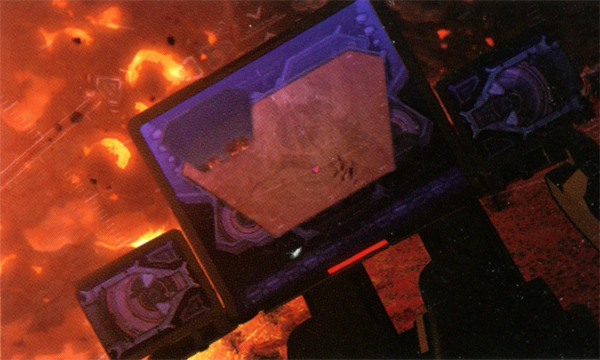
“You should be able to confirm that the monitor feed from the camera near the trap, the container missile, is being transmitted to the Xi Gundam and displayed on the CP’s main console. But under Minovsky particle conditions, radio waves are extremely weak, so you can’t receive the feed unless you’re close to the trap.” (Genma)
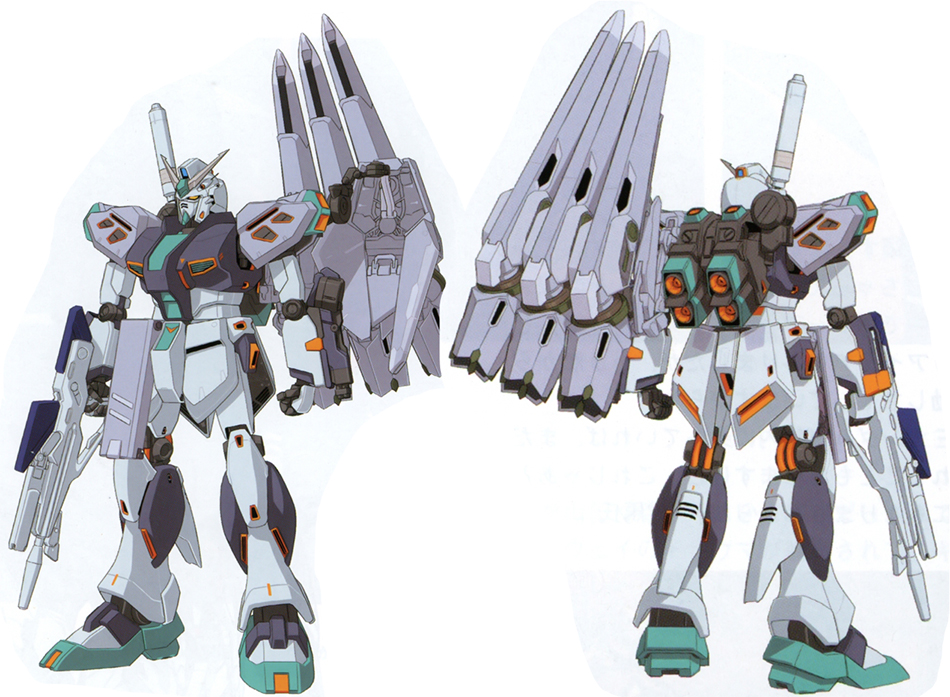
RX-94 MASS PRODUCTION TYPE NU GUNDAM
A mass-production prototype of the RX-93 Nu Gundam. It achieves approximately 80% of the original unit’s baseline performance. In the process of becoming the base machine for the TX-ff104 Alyzeus, various parts were given minor revisions, including changes to the structure of the head and hip-joint block. The forearms are equipped with vulcan guns.
COMMENTS
About the Shelf Nozzle
“In my mind, I define the shelf nozzle as a piece of equipment that began development somewhere around U.C. 0087 to 0088. It was probably being tested on machines like the GM III or the Jegan. There may also have been mounting methods like attaching them to the arms, as with the Gaplant, or equipping only a single unit on the back, as with the Hazel. I imagine the number of nozzles installed would also have varied depending on the operation. Now, with the shelf nozzles making an appearance, some people may have jumped to the conclusion that ‘this must connect to the Buffo Concern or the Crossbone Vanguard,’ but a shelf nozzle is simply a generic term for thrusters stacked in a shelf-like arrangement. Shelf nozzle does not equal proprietary Buffo technology. I mean, funnels are built by Neo Zeon and Anaheim Electronics, right? So whether this technology connects directly to Buffo is still anyone’s guess.” (Genma)How the TX-ff104 Alyzeus Parts Are Mounted
“Originally, I expected it to be much slimmer, smaller than the Xi Gundam, even. But from Katoki’s point of view, ‘If there’s too much of a size difference when they’re standing side by side bothers me a bit.’ Then Director Murase also came in with the request that it should be like putting it up on tall clogs, so in the end it wound up about the same size as the Xi Gundam. The idea was that since they’re just stilts, it’s fine if the frame is hollow and can barely walk, but Katoki gradually bulked things up bit by bit, keeping in mind what it would need to look like as a plastic model or toy” (Genma)
A COMPARISON BETWEEN THE PENELOPE AND THE TX-ff104 ALYZEUS
The TX-ff104 Alyzeus was a training machine for the Penelope, and while its power source differed, it was likely designed to approximate the Penelope in such respects as weight balance and handling characteristics, even if those qualities inevitably fell somewhat short. From a design standpoint, the Alyzeus was initially aimed in a direction that would make the contrast with the Penelope clearer, leaner, smaller, and visibly distinct. Genma himself also preferred a version that would emphasize more strongly that it was only a trainer. But in the end, the surprise of having “something Penelope-like” give way to the appearance of a mass production type Nu Gundam made for a tremendous impact.
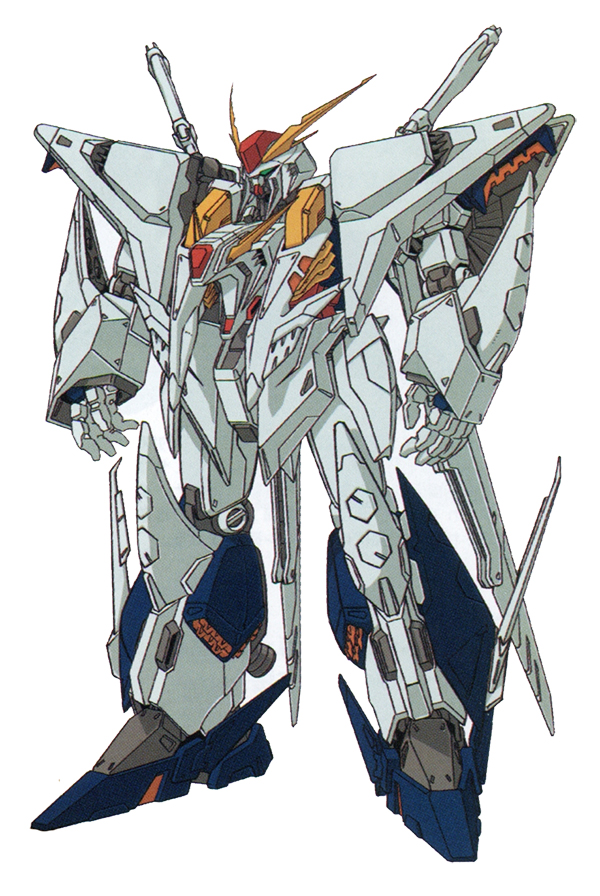
RX-105 XI GUNDAM
COMMENTS
Consideration of a Power-Up for the Xi Gundam
“Since this is a trilogy, it would have been nice if we could have given the Xi Gundam a bit of a refresh in the second film as well, but Director Murase vetoed it. And honestly, from a story standpoint, it only covers about a week, so it would have been a stretch. Realistically, if there were enough room to power it up in each chapter, then the natural thing would be to go all-in on the first upgrade from the very beginning. Also, more than half of the parts that were supposed to be delivered from Anaheim Electronics ended up submerged, but there was an idea floated, ‘What if they recover those and use them for a mid-story power-up?’ The problem is, they’ve already moved on from the ship by that point. If the Xi Gundam were still aboard, there might still be things we could do, but as it stands, there’s just no way to make that work.” (Genma)
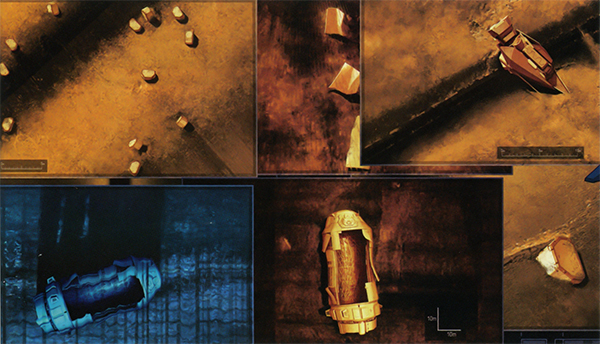
“In the wreckage of the Cargo Pisa, which sank to the seafloor and could no longer be recovered, you can actually see parts that appear to be the legs of the Xi Gundam.” (Genma)
COMMENTS
Is the Xi Gundam’s Face the Novel Version or the Game Version?
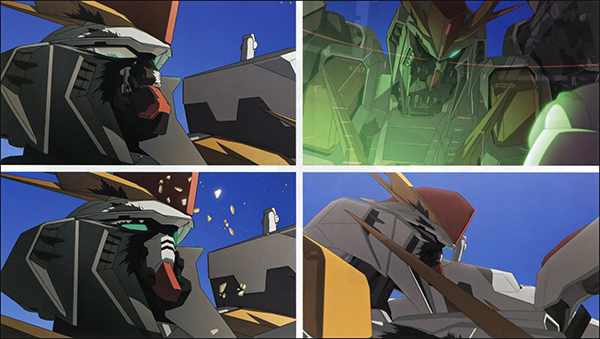
“In truth, we had already decided back in the preparatory stages of the first film that the mass production type Nu Gundam would tear away the Xi Gundam’s novel-version face. I think people have already seen that in the way the ending is depicted this time. When I first pitched the plan, the idea was that, in the course of fighting the mass production type Nu Gundam, ‘there’s no way Lane can win given the gap in machine performance, but even in defeat, I want to give him a moment to shine.’ The concept, then, was that at the very end, the mass production type Nu Gundam would land a blow on the Xi Gundam’s face, and underneath it the game-version face would appear. That was the scenario I had in mind. Hathaway’s trauma would be triggered, an opening would appear, Lane’s strike would get through, and the Xi Gundam would be revealed not as some Gundam-like imitation, but as a true Gundam. That was how I planned it. The mass production type Nu Gundam has beam spray guns mounted on its arms, right? But with a beam spray gun, the whole head would obviously just be blown off, so we newly established vulcan guns powerful enough to destroy only the facial mask. In the end, though, they never got used.” (laughs) Director Murase, on the other hand, took the concept and elevated it further, brushing it up into a direct confrontation with Amuro himself. His storyboards came back with this idea where, in the final moments, just as Hathaway’s true face is glimpsed, the Xi Gundam’s true face is likewise laid bare, linking the character and the mecha. Even I was completely floored when I saw the proposal brought to that level.” (Genma)
COMMENTS
How Minovsky Flight is Defined
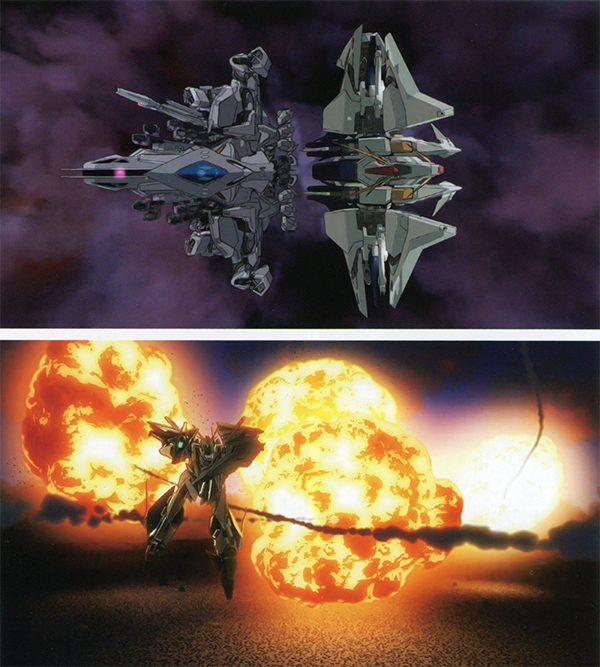
“As a general rule, people tend to define the difference between Minovsky Craft and Minovsky Flight like this: Craft only hovers, it does not provide propulsion, whereas the Flight system used by the Victory Gundam also handles propulsion. My view is that the Xi Gundam’s Minovsky Flight sits somewhere between those two definitions, and should be understood as having propulsive capability as well. Originally, in the early stages, the plan was to render the Xi Gundam and the Penelope in CG while all other mobile suits would be hand-drawn. But Director Murase said he wanted to use CG to recreate the motion of Minovsky Flight in a slick, almost unsettlingly fluid way, and that line of thinking has continued ever since. That’s why the visual direction so strongly emphasizes the difference between machines equipped with Minovsky Flight Units that can fly freely, and machines still bound by gravity. Even in the first film, the Messer F-type used its vectored tail stabilizer to leap around while carrying out guerrilla warfare. And in the second film as well, both the Earth Federation Forces and Mafty are, above all else, still heavily shackled by gravity.” (Genma)
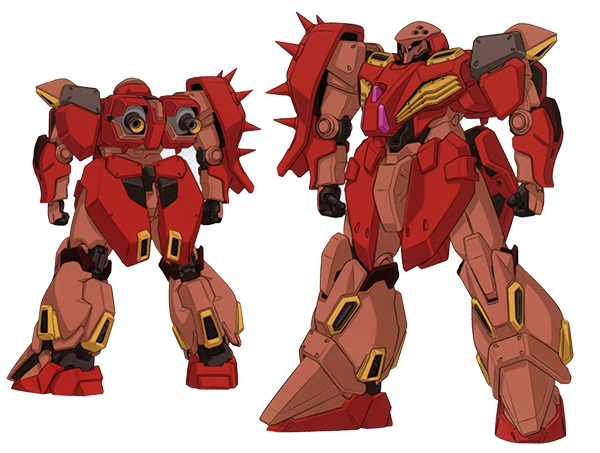
Me02R-M01 MESSER TYPE M01 (GAWMAN’S UNIT)
A variation of the Messer produced on a different factory line from the Messer F-type. Commonly referred to as the M-type. Because of the demands of guerrilla operations, it was necessary to prevent the manufacturer from being identified, and so its outward appearance was differentiated from the F-type. Its internal frame and baseline specifications, however, remain identical. Gawman pilots it as the replacement for the unit he lost during the Davao air raid. The left shoulder of Gawman’s unit was left in a plain base coat, as there wasn’t enough time to apply the full paint scheme.
COMMENTS
The Difference Between the Messer M-Type and F-Type
“We had always intended to bring out the Messer M-type. Katoki’s idea was that the M-type and the F-type were fundamentally identical in performance, with the only real difference being the factories they came from. But personally, I felt it might be better if there were at least some slight distinctions. So I was glad Director Murase added that line about it still being ‘quirky as ever.’ Of course, that may only be a trait of the early production type. As manufacturing continues and ramps up, it’s entirely possible that performance tuning would iron things out and bring them closer to a standard baseline. After all, once you start assuming less experienced pilots will be coming into the fold, it would hardly be surprising if they put more effort into adjustments.” (Genma)The M-Type and F-Type Are Fundamentally the Same Structurally
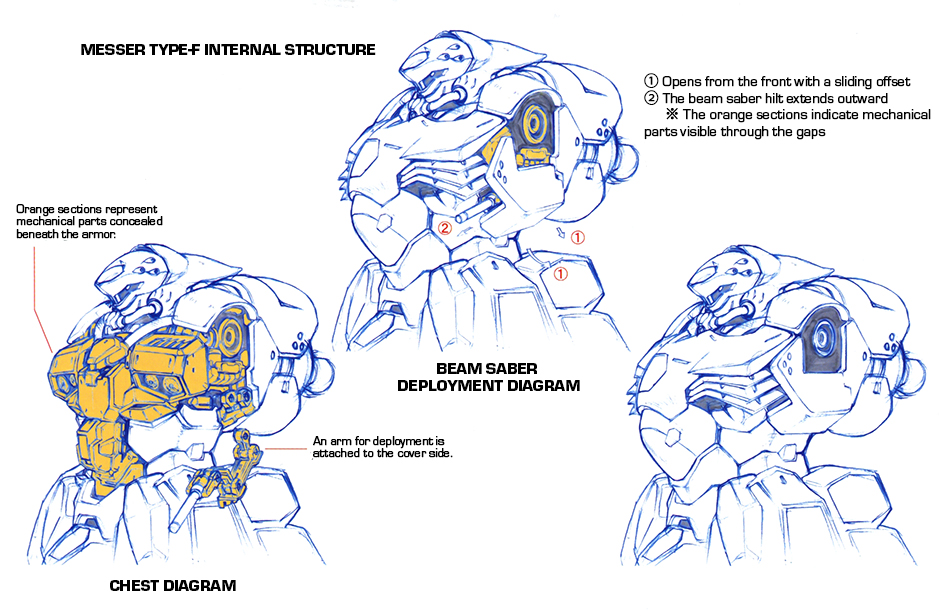
“In the setting, the M-type and the F-type are built on the same frame. At first, visually speaking, we were also moving forward on the basis of that same frame. But they ended up looking too identical, so partway through, both the M-type and the F-type were each drawn with their own distinct details. The shared frame remains, fundamentally, a setting-side concept. Unlike the M-type, the F-type stores its beam saber under the armpit area. The M-type, by contrast, has that underarm armor sealed shut, so its beam saber is stored inside the spike shoulder armor on the right shoulder.” (Genma)
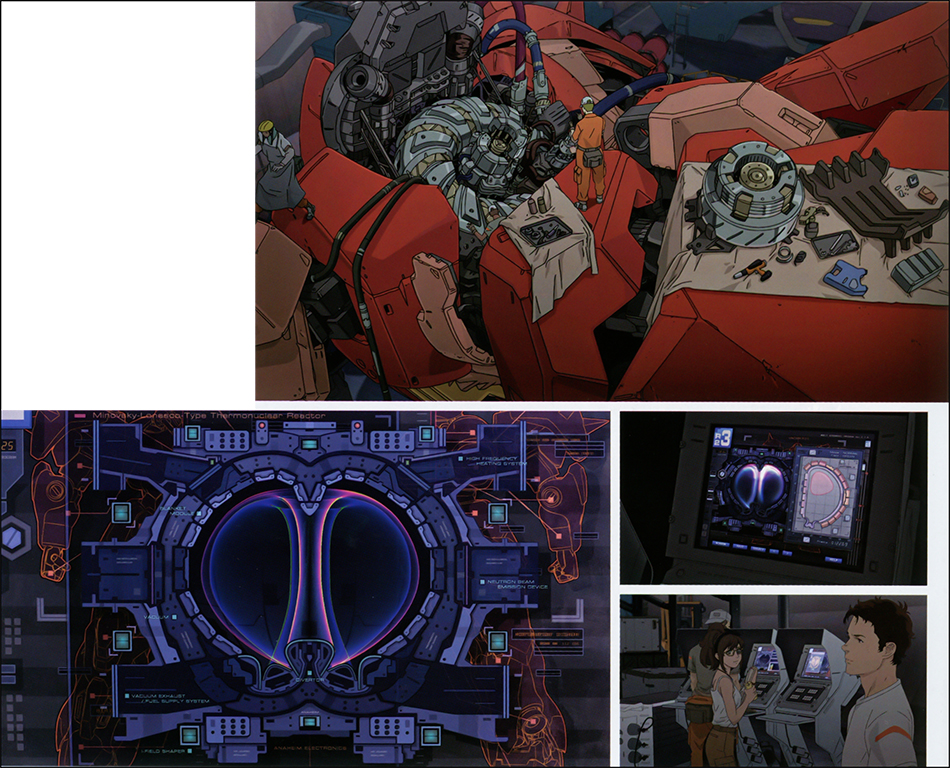
“There’s an explanation given of the Minovsky-Ionesco-type thermonuclear reactor, the heart of a mobile suit, and that may well be seen as a careful gesture toward new viewers, an effort to help them understand the world of the Universal Century.” (Genma)
FD-03-00 GUSTAV KARL TYPE-00
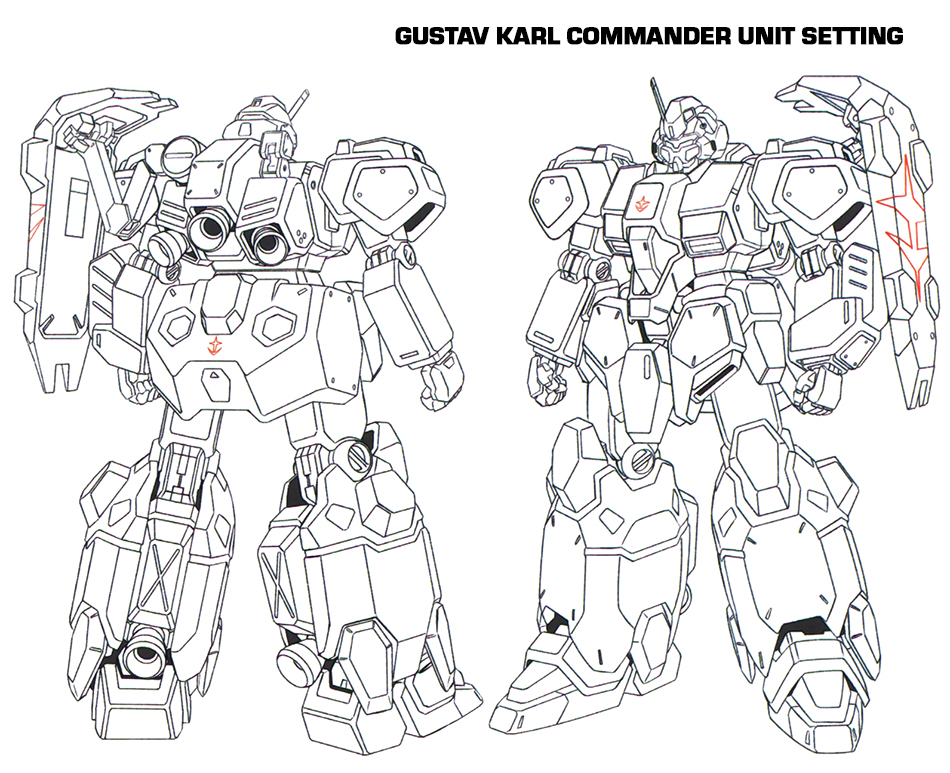
A mass-production mobile suit whose deployment within the Earth Federation Forces was underway by U.C.0105. In the course of transitioning from the units first deployed on a limited basis in U.C.0096 to full mass-production specifications, the frame structure and other elements underwent a comprehensive overhaul and refinement, with the model number updated from Type-13 to Type-00. The standard unit, fitted with a rod antenna on the left side of the head, is known as the “Dora Karl,” while a commander-type unit also exists, equipped with a blade antenna on the right side of the head. (See figure above)
COMMENTS
Operational Deployment of the Gustav Karl
“In the final stretch, the Gustav Karls come at the Xi Gundam in two-man cells, and Hathaway even remarks on how skillfully they’re fighting. By this point in the era, I think it’s fair to say that mobile suit combat in coordinated two-unit teams has become an established style. Both machines are carrying beam rifles of the same design as the ReZEL’s, too, which gives the impression that the Earth Federation’s equipment is gradually moving toward standardization.” (Genma)
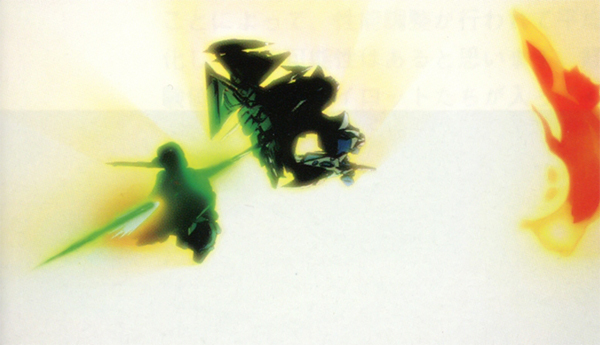
“It may not be obvious at first glance, but the Xi Gundam cuts down the Gustav Karl Type-00 directly without even removing the beam saber from its shoulder mount.” (Genma)
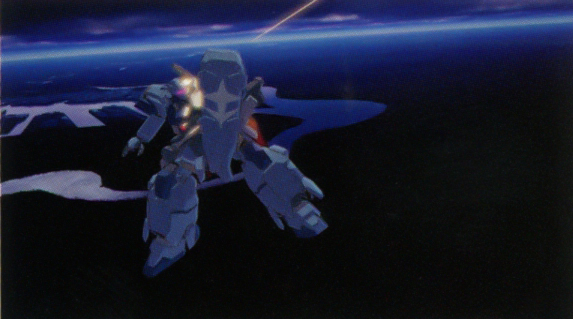
It may be difficult to catch at a glance, but a commander-type unit also appears in the fighting at Oenbelli.
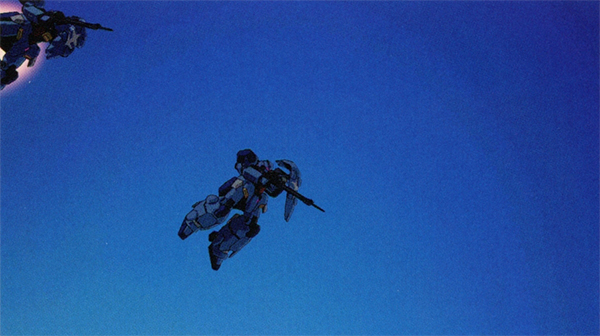
“The two Gustav Karl Type-00 units fighting the Xi Gundam are dressed in matching twin coordination, but in a subtle touch, one of them is actually fielded as a commander unit fitted with a Type-13 lineage head.” (Genma)
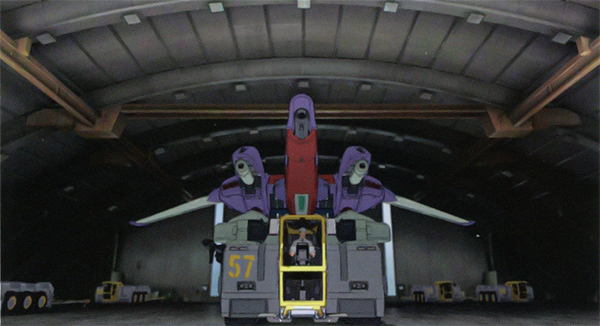
The Re-GZ Custom also appears quietly in the background. This time around it’s little more than a cameo, but here’s hoping for a bigger role down the line.
Source: Great Mechanics G, Spring 2026 (pages 003-010)